Hospitality industry advocates voice ongoing frustration over penalty rates
/
Sean Grobbelaar has been manager at Cecilia’s Restaurant in Toowoon Bay on the NSW Central Coast for the past six years, working with his wife who runs the business. It’s a small restaurant which seats 50 and is open Wednesday to Sunday because the business can’t sustain opening seven days a week, and certainly can’t afford to open on public holidays due to hefty penalty rates.
Listen to the podcast

sean grobbelaar
Cecilia’s restAurant manager
Sean, who writes a blog called The Future CEO as an outlet for self-expression, took to his keyboard late last year to draft an open letter to the Central Coast Council and the NSW Premier advocating for more flexibility around hospitality penalty rates. He also shared his thoughts on the issue on his blog, and with Foodservice Rep:
“On the last October long weekend I had a lot of people phoning me asking ‘why aren’t you open?’”
“We are well connected to our local community, we serve a lot of locals every week, and my impression is most of them don’t have any idea why we’re not open more days of the week and especially why we have to close on public holidays,” Sean says. “On the last October long weekend I had a lot of people phoning me asking ‘why aren’t you open?’ and it’s very difficult to explain because it can’t be done in a one minute conversation.”
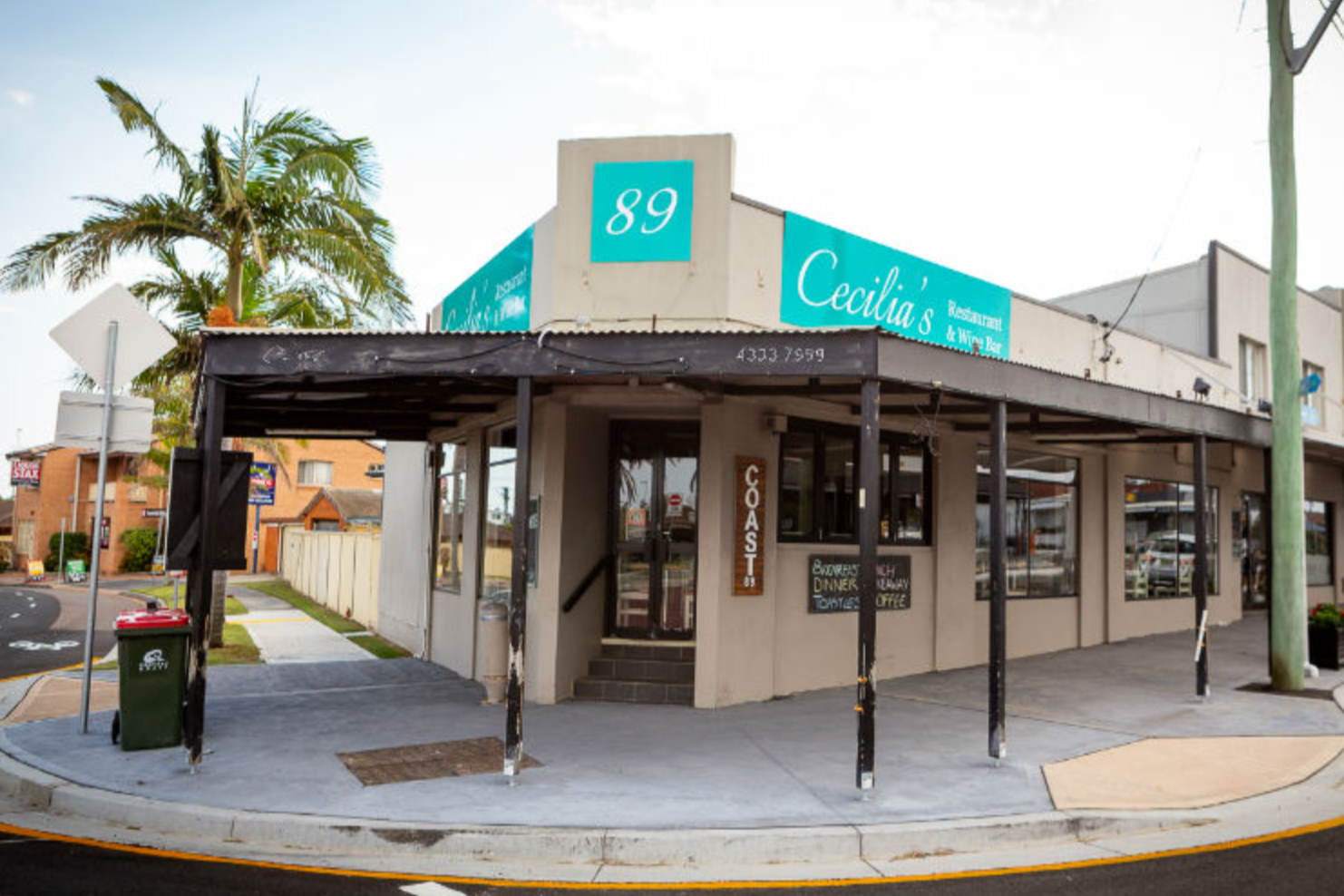
Cecilia's Restaurant & Wine Bar

Smaller venues struggle to stay open
With the topic becoming an increasing source of frustration, Sean decided to detail in his blog “just what it would cost us to open. Everyone says we need to protect staff, and I agree that staff should get penalty rates for working weekends – but if public holidays are costing the economy $50m a year, then surely that’s having a more negative than positive impact on a community.”
Sean makes the point that pubs and clubs, with their revenue subsidised by poker machines, can afford to open on holidays, “and that creates a huge imbalance between them and the rest of our industry – they can set their costs by the pokies but we can’t. Our staff end up losing out because they don’t work, we end up losing out because we have to shut down during busy periods, and our customers end up losing out because they can’t dine with us. And it seems to me that in an area like the Central Coast, where the Council spends millions to promote tourism, that when a public holiday results in half the town businesses being shut, it’s a case of backward thinking.
“If you can’t be profitable, you’re not going to open”

Toowoon Bay NSW Central Coast
“Surely if you want to be a tourist destination, you have to make sure your local restaurants and retail shops can afford to open and be profitable. If you can’t be profitable, you’re not going to open. It seems to me this problem has been overcome in other places where people have looked for solutions and my question is, why can’t we do the same?”
Have your say in our anonymous reader survey
How are labour costs, penalty rates and non-wage employment expenses impacting your hospitality business?
Easter weekend ‘triples your wage bill’
He argues local laws “are not helping the locals on the coast where a lot of people work in hospitality. They’re not fulltime employees unless they’re working for the clubs – businesses like ours don’t have enough volume to open Monday to Sunday, most restaurants here are not open seven days, so there’s not fulltime work for managers or wait staff. We open on Wednesdays and Thursdays but it’s just me and the chef – I’m only hiring staff Friday to Sunday, so they’re all casual – which means they’re earning 300 per cent markup on a fulltime wage.
“I think maybe the Government could help us via some kind of tax rebate”
“When Easter Weekend comes around each year – four days from Good Friday through to Easter Monday – it triples your wage bill, and a 15 per cent surcharge covers nothing. So what happens is I have no staff on, I’m packed to the brim and I end up with bad Google reviews and a grumpy chef. Surely that’s not the objective of penalty rates, but it’s the result.”




Sean recognises the issue is complex and admits he doesn’t have any simple solutions. “There’s so many components, from PAYG tax to public holidays, and I think we should be asking whether the casual markups have to be so high. I do think people should have the choice of whether they work or not work, I think that’s totally fair – I think maybe the Government could help us via some kind of tax rebate, assuming they want us to be open and contributing to the economy; they should help us out. Because it’s not just the 300 per cent markup, it’s super that goes on top of that as well; the employer is losing out all the way. So I think if Government wants hospitality businesses to be open, they need to provide some form of offset, otherwise it doesn’t pay to be open.”
“You’re trying to do all the work yourself while saving on employing staff, and you’re just killing yourself”
Sean says he loses money every Easter weekend – “and frankly I’d rather stay at home or go to the beach, than open, work like a dog and earn nothing. All we end up with is mental health issues rather than money in the bank and I think that’s the case for a lot of small business owners – you’re trying to do all the work yourself while saving on employing staff, and you’re just killing yourself.”

Small business ‘could be run out of business’
“Another thing I find sad is once you’re over the age of 18 or 21, I can’t afford to employ you anymore, and I think that’s ridiculous. So I end up with 15 year olds on my books – I get them to run the food and wipe the tables down – but you’re basically taking people out of the workforce at 21, and that seems crazy. In our industry we don’t employ on merit, we employ on age – we’re becoming like McDonalds.
“The only thing I’m taking away from the business at the end of the day is cheap wine”
“At the end of the day it seems to me that if we keep going the way we are, we’re going to run small business out of business because it doesn’t pay – I could probably make more money staying at home watching my house appreciate. If you want to lose money, the best thing to do is open up a restaurant or café. The only thing I’m taking away from the business at the end of the day is cheap wine – even the local Woolworths is cheaper than my wholesaler half the time, so it’s not often cheap food anymore!”
Legislation ‘moving in the wrong direction’

John Hart OAM
Restaurant and Catering Australia national president
Restaurant and Catering Australia national president John Hart OAM says that while there have been legislative changes over the past couple of years, “unfortunately as far as hospitality is concerned it's all been in the wrong direction. The penalty rate changes that occurred with the legislation passed back in August means there is now no longer even the flexibility within the hospitality Awards for annualised salaries and the like, let alone any additional flexibility in other ways.”
“There’s really nothing the industry can do to counter [Government] within the current political environment”
John says the issue for the hospitality industry is that the Federal Government sees the problem from a different perspective than it does: “They’re focused on hospitality employees rather than employers – and the sad truth is there’s a point at which those two interests coincide, and that is when businesses cease to exist and then jobs disappear. And we're fast approaching that in a whole range of circumstances.
“Any attempt to make conditions better would most likely result in things getting worse”

“There’s really nothing the industry can do to counter that within the current political environment. In fact it’s likely that anything that was done would be counter productive, in that any attempt to make conditions better would most likely result in things getting worse.”
Industry is ‘in a tight spot’
John argues the industry is in a tight spot and that “the only way to get any sort of advantage in terms of operational viability is to change the way we're doing things, via engaging more technology to build efficiencies through doing business differently. And by that I mean using centralised production kitchens, having more multi-outlet operations – all of those ways in which we can do things better or differently are really the only way we're going to improve things. It’s not going to be about any change to rates or conditions for the existing workforce.”
Regarding Sean Grobbelaar’s push to introduce more flexible working conditions, John says local Councils can’t do anything with regard to penalty rates. “A defining feature of our system is our rates are determined by Awards and they can’t be negotiated, so there really is no room to move. It’s really just about doing things smarter, building productivity through either technology or other ways of doing things, and that’s being done across the board.”
Using tech to save on labour
He makes the point that hospitality no longer has anywhere near the number of people employed that we used to have, “because the workers haven’t been there so we haven’t been able to hire. The solution has been to use technology to save on labour or to change the way we do things – this has been forced upon the industry – and that includes the use of AI.
“There’s only so many roles you can automate out of a system”

“Having said that, there’s only so many roles you can automate out of a system, and only so many roles you can use those sort of change processes within, such as buying in pre-prepared product and having less staff in the kitchen – that now makes more sense than it ever did, but those sorts of changes can only happen once and only go so far in reducing headcount.
“What the Government like about that approach is it’s shifting people away from jobs in lower paid industries like ours, to higher paid ones such as in the technology sector where they’re creating the apps we’re using to implement the kinds of production efficiencies I’m talking about. The problem is that once you get to the point of eliminating every role that can be eliminated, this strategy is then subject to the law of diminishing returns.”