Rethinking modern Australian cuisine through native ingredients and traditions
/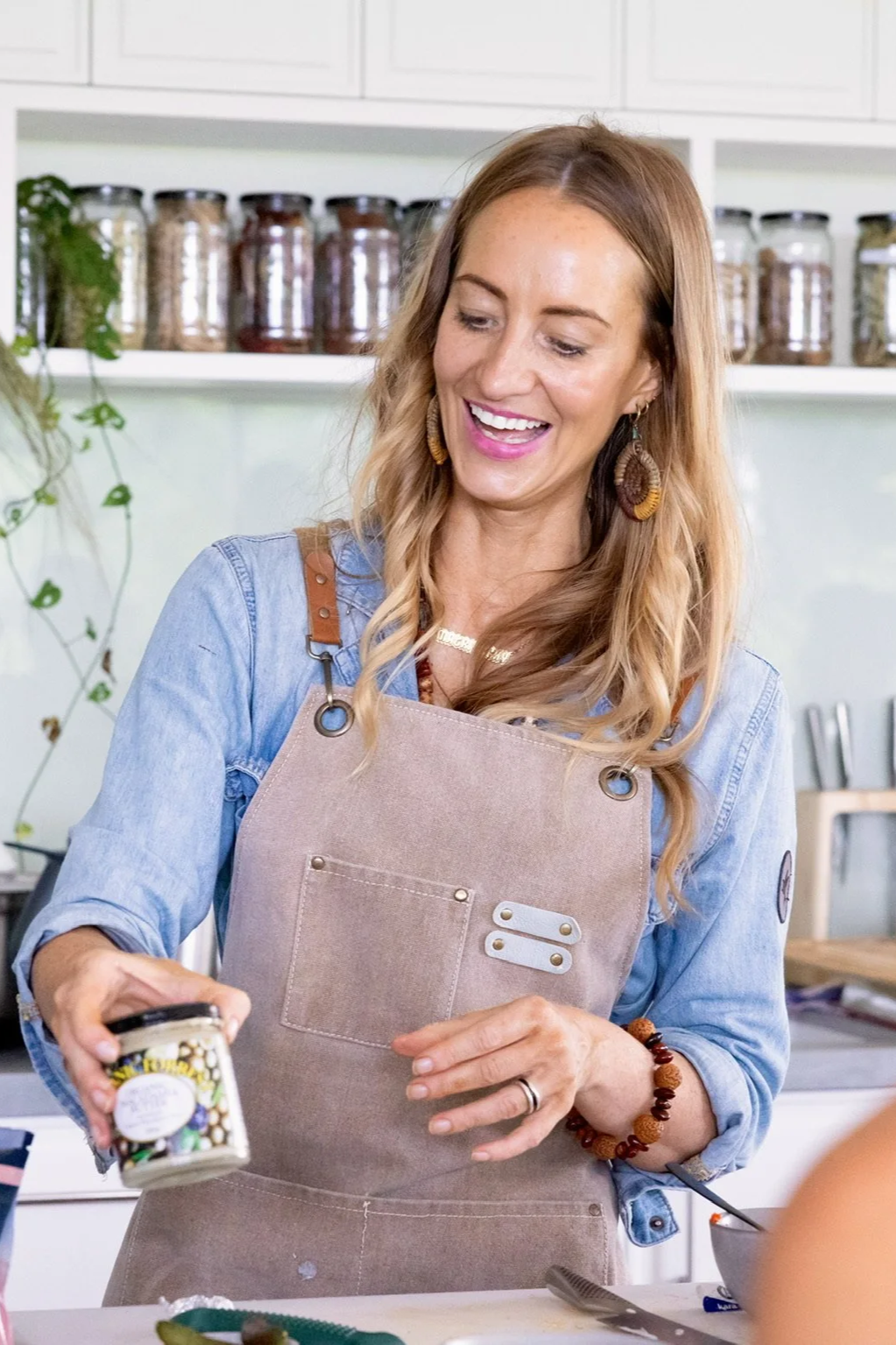
KARKALLA ON COUNTRY’S Mindy woods
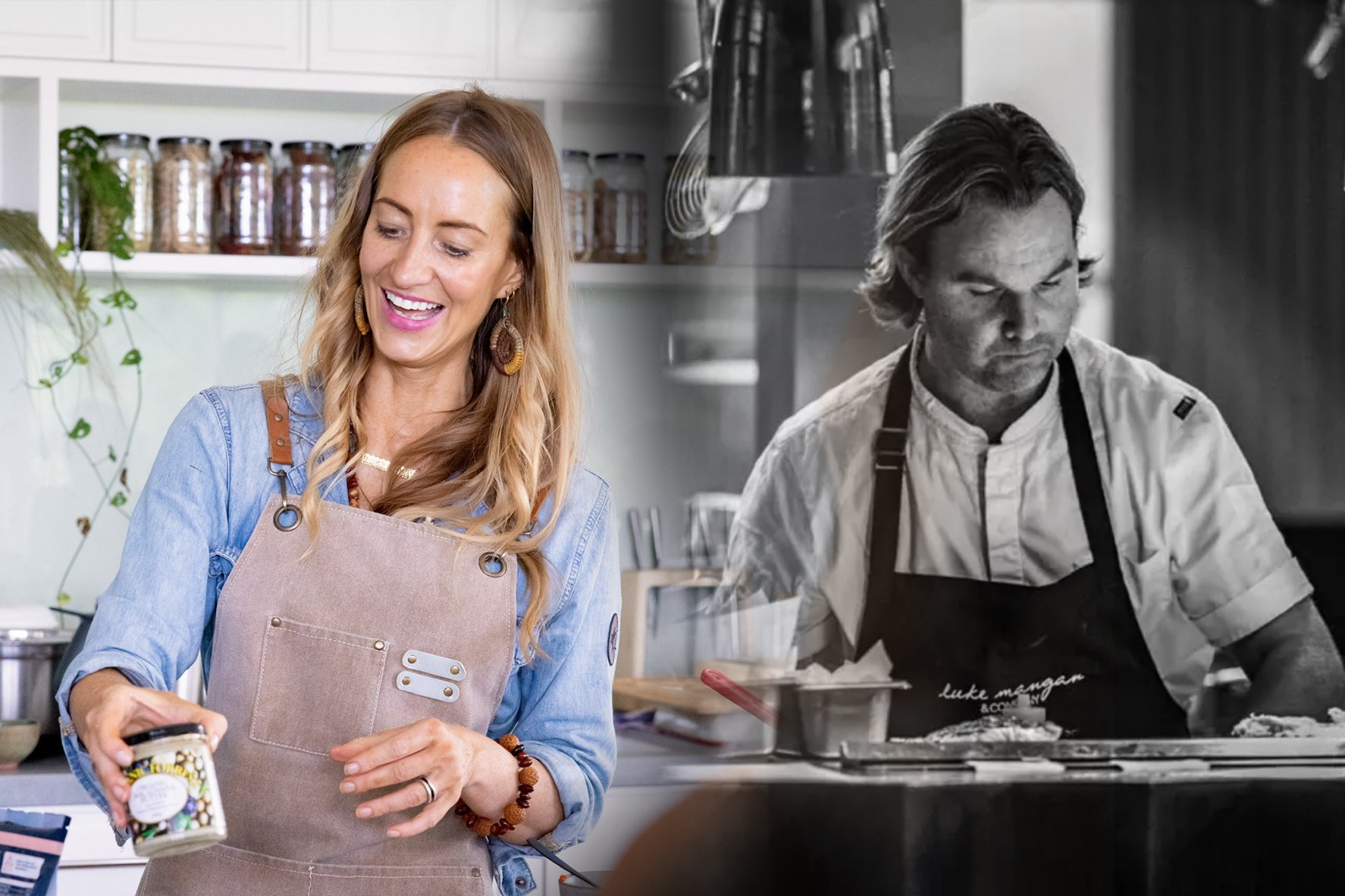
Mindy Woods is the first indigenous female chef to receive an Australian Good Food Guide hat, for her Karkalla restaurant in Byron Bay on the NSW north coast. A former physiotherapist, Mindy says she has “gone from kneading bodies to kneading bread!”, having realised some 15 years ago that connecting with people through food was her true passion.
Today she is a keen advocate for Australian native herbs and spices, which she markets through her Karkalla range, as well as providing a native ingredients cooking school called Karkalla on Country, which aims to redefine modern Australian cuisine by placing native ingredients and traditions at its heart.
Australia home to world’s oldest food culture
“When I threw myself completely into food, I worked my way around Sydney, then travelled the world and when I came back to Australia I found there was one huge piece missing from our food culture, and that was First Nations food,” Mindy says. “I think we have this misconception in Australia that we’re not a food culture, but in fact we’re home to the oldest food culture on the planet. I really wanted to bring that to the forefront of the dining experience and the only place I could do that was on my ancestral land – my nan showed me all about our native ingredients as a little girl, and karkalla was the first native plant I picked with her.”
“We are so fortunate in having such diversity we can draw upon”
Karkalla restaurant was open in Byron for almost five years before Mindy decided to take the next step. “Any good chef loves to learn, and what I’ve learned in the last five years is the diversity of food across Australia. When you map it, our food culture is not a monoculture – it’s like when you cross borders across Europe, you have a different culture, language and food landscape. It’s the same here, going from the central desert country to cold country down south, to the tropical foods up in the far north – we are so fortunate in having such diversity we can draw upon. I come from a long line of Bundjalung salt water women – where rainforest meets the ocean – and that’s the food of my mob, but I like to meet other mobs and learn about their food culture and traditions while teaching and speaking about my own.
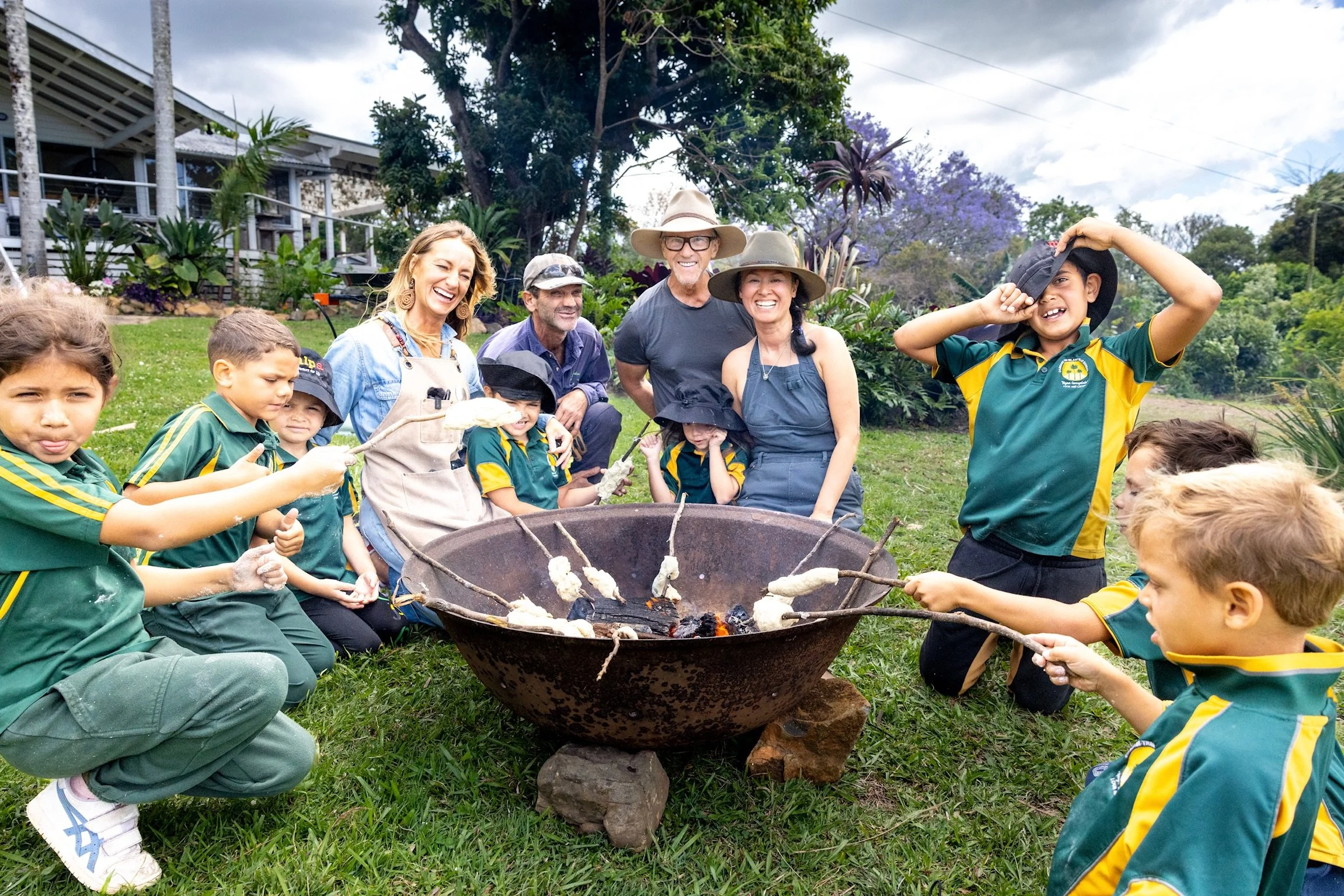
“My culture doesn’t exist in four walls, but lives and breathes in country, so last year we decided to evolve and reimagine what hospitality could be. Now with Karkalla on Country we have the opportunity to welcome guests to my community, to walk them through native food forests, to talk about the many different uses of these ingredients – it may be cultural, medicinal, culinary or a combination of all three. Then I’ll cook a long, beautiful lunch and they’ll get to see how these foods are used.”
Breaking down the stereotypes
“We want to help people understand how important these foods are for our future food security”
Mindy is keen to break down some of the stereotypes around Australian native food: “it’s a lot more diverse than witchety grubs and kangaroo meat – we have such an abundance of spices, herbs and other components and that’s what we love to invite people in to experience.
“The beautiful thing is that we get locals along with domestic and international travellers who are curious to experience an opportunity to share in our knowledge, and we’ve come a long way even within our own community – our Elders encourage me to be out there sharing this because we want to walk together as a truly united country and a reconciled nation. We’re all so lucky to call this place home, but the story of our native foods is still largely untold. We want to help people understand how important these foods are for our future food security – this way we can all connect and feel part of this beautiful country.
“When we eat together, we realise we have more in common than we have differences and this is the power of food. That’s why it’s so important to have First Nations chefs out there who are graciously sharing our culture and its flavours.”
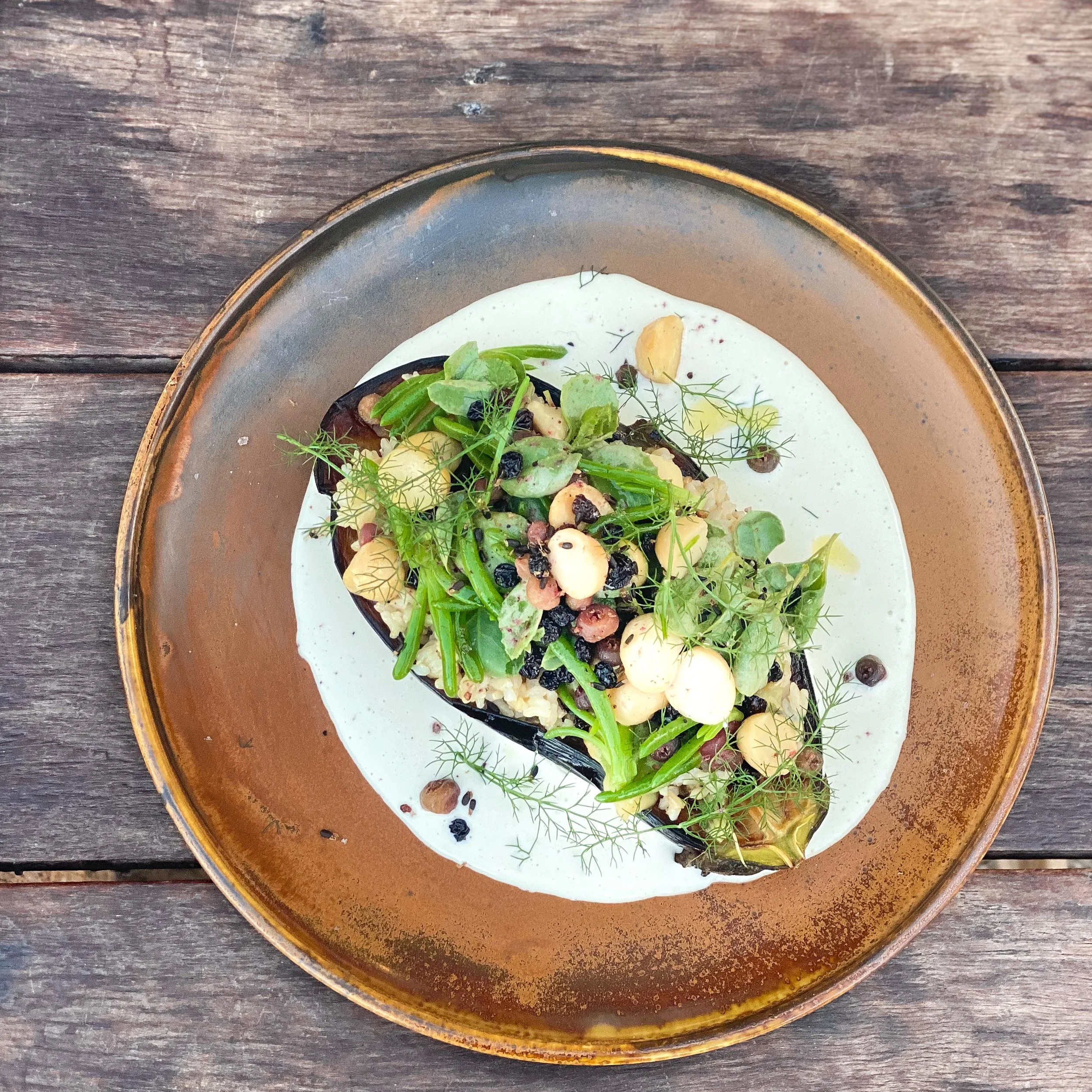
Natural superfoods in abundance
“When we eat together, we realise we have more in common than we have differences and this is the power of food”
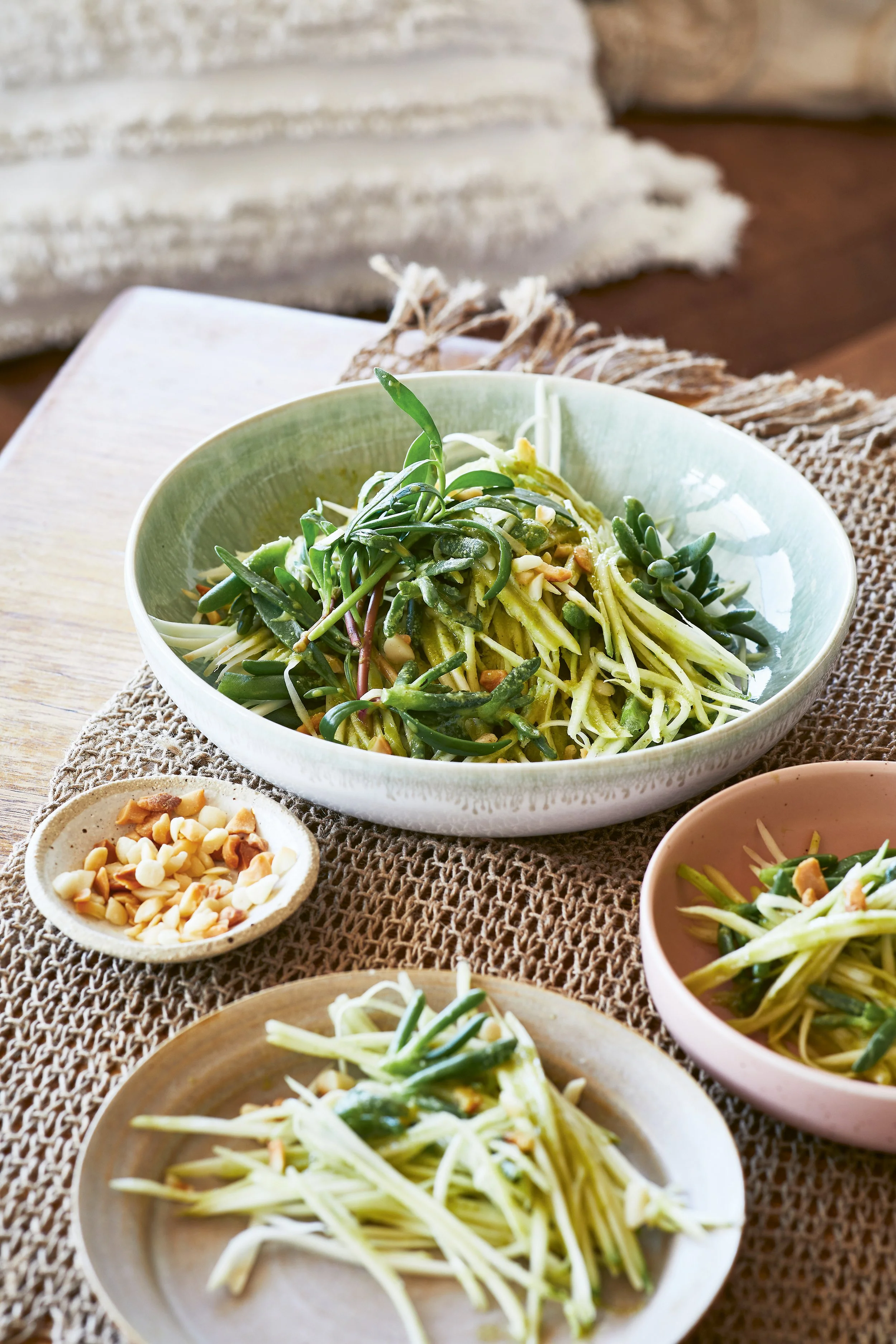
Mindy points out that while there are some six and a half thousand food ingredients unique to our shores, only 13 are currently approved by Food Standards Australia new Zealand. “That’s why you see the same ingredients so often – the warrigal greens, the Kakadu plums – but there are so many more and we should be promoting this diversity. They grow seasonally, they don’t need herbicides or pesticides, they are literally natural superfoods and they are the flavours and tastes of this country. Macadamia nuts were the first commercialised native food on the planet and today we have lemon myrtle, aniseed myrtle, so many amazing things we can use in our culinary repertoire.
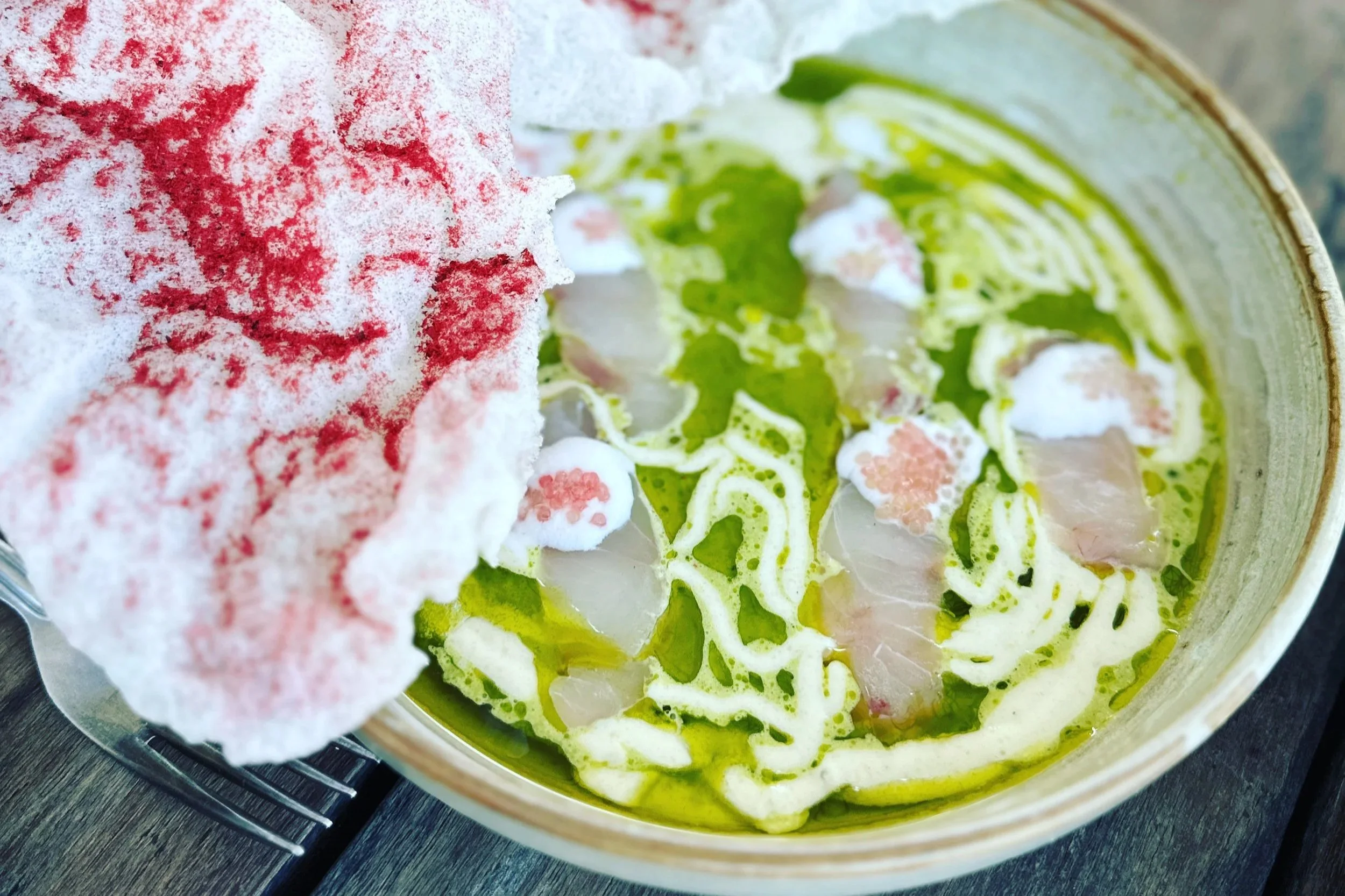
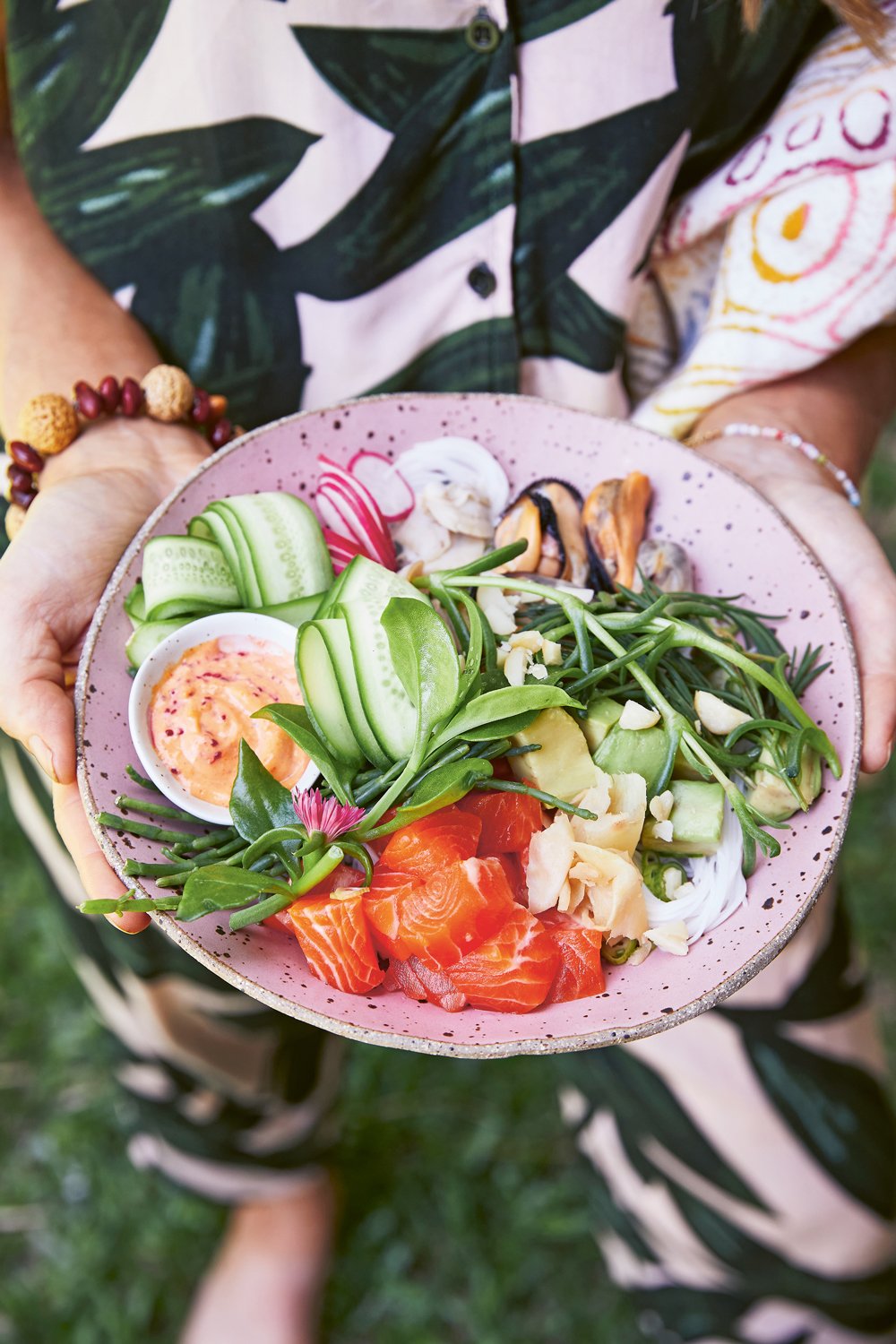
Snapper with Lemon mytyle, fingerlime and ooray
“I love the fact that Australia is so multicultural and we can take elements from other cultures and embed them into our food – that’s when we’ll get a truly Australian cuisine. For example, when you make a spanakopita with warrigal greens or a stir fry with beef and pepper berry, you’re embracing a variety of shared heritages and representing them all through your food.”

Sourcing more sustainable food choices
Mindy also makes the point that many native ingredients are more sustainable food choices for our nation. “You can’t currently buy warrigal greens as easily as you can kale – but kale is unsuited to Australia because it takes so much water to grow, whereas we have warrigal greens growing everywhere up and down the coastline. Why reach for black pepper when you can use pepper berry, which is a beautiful aromatic spice and you only need a quarter of the amount you’d need in black pepper to achieve a similar result? Then there’s pepper leaf, which is an aromatic native alternative to white pepper – these choices can add so much to your food, they’re like the chef’s secret weapons.
“I think we’re robbing our apprentice chefs by not giving them more opportunity to learn about native ingredients. I’m currently working with the National Indigenous Culinary Institute (NACI) to revitalise these knowledge systems – because it’s so important that we share this around. Our beautiful native finger limes are endemic to Bundjalung country and have been in use for thousands of years. Davidson’s plums are becoming well known and there are actually four different types – these are ancestral foods and in many ways they are knowledge keepers, because we can learn so much about country from them, they’re cultural touchpoints. The finger lime is actually the ancestor of modern lemons, limes and oranges.
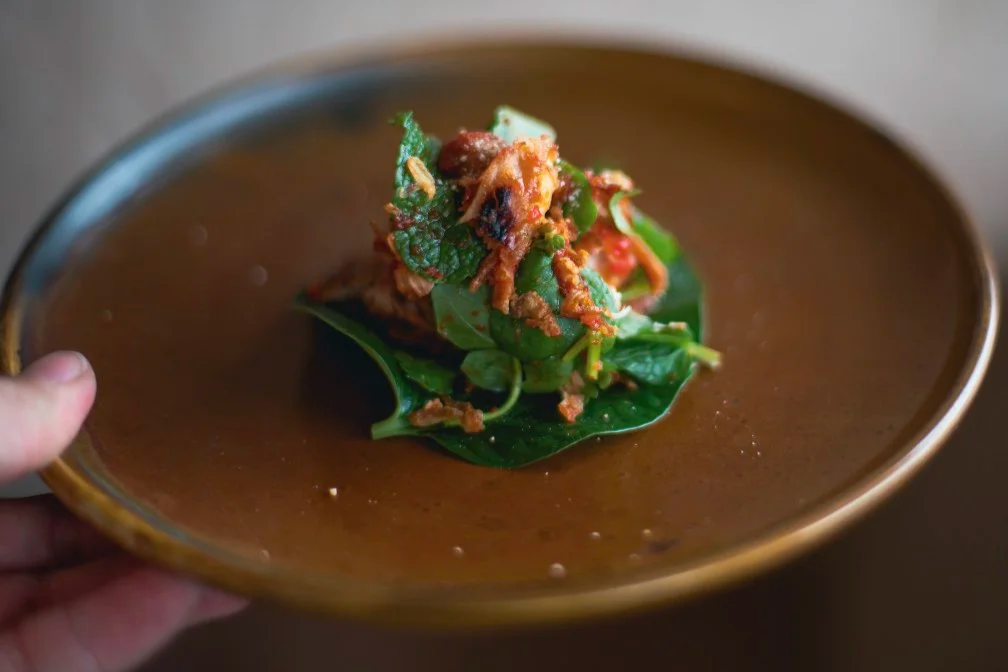
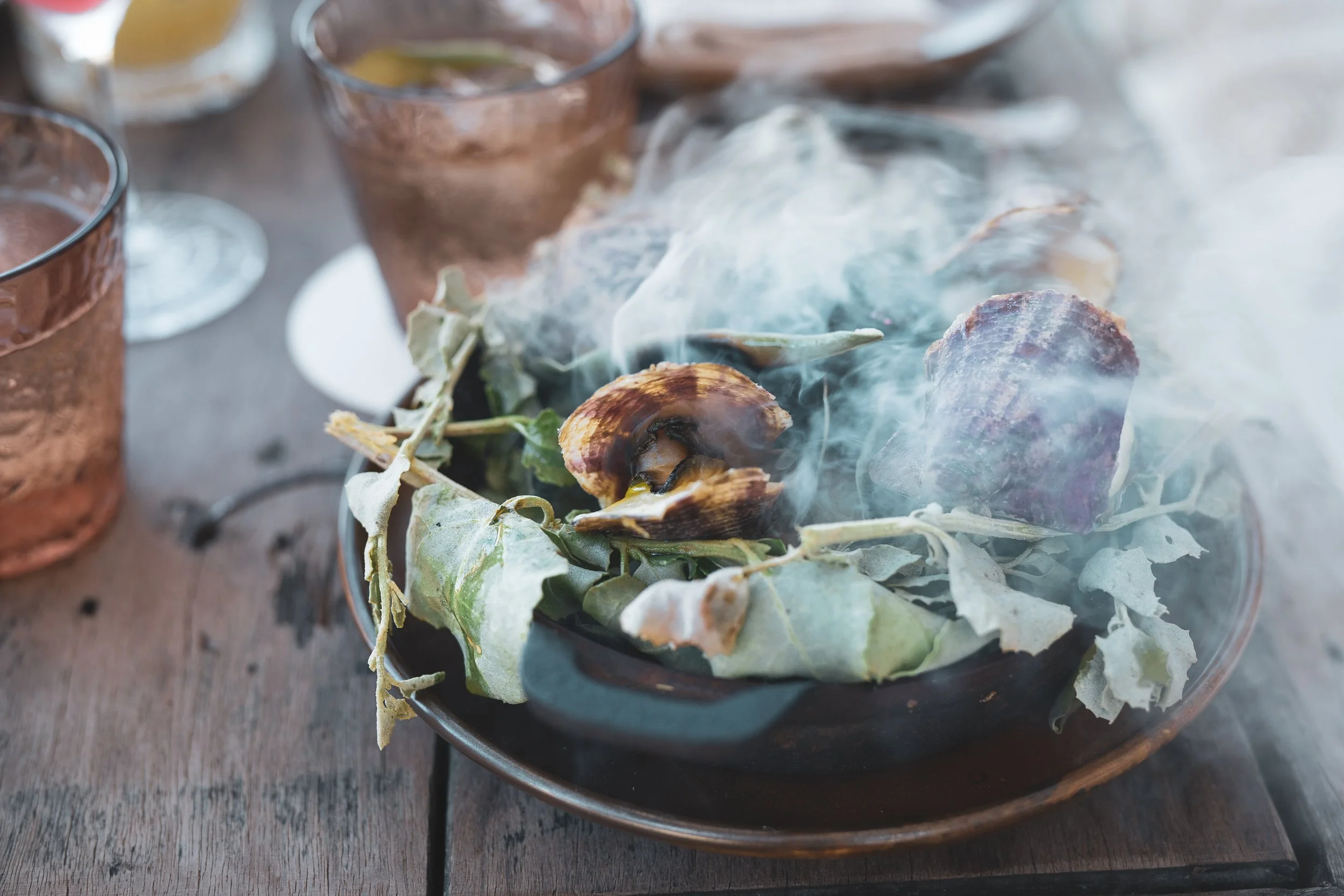
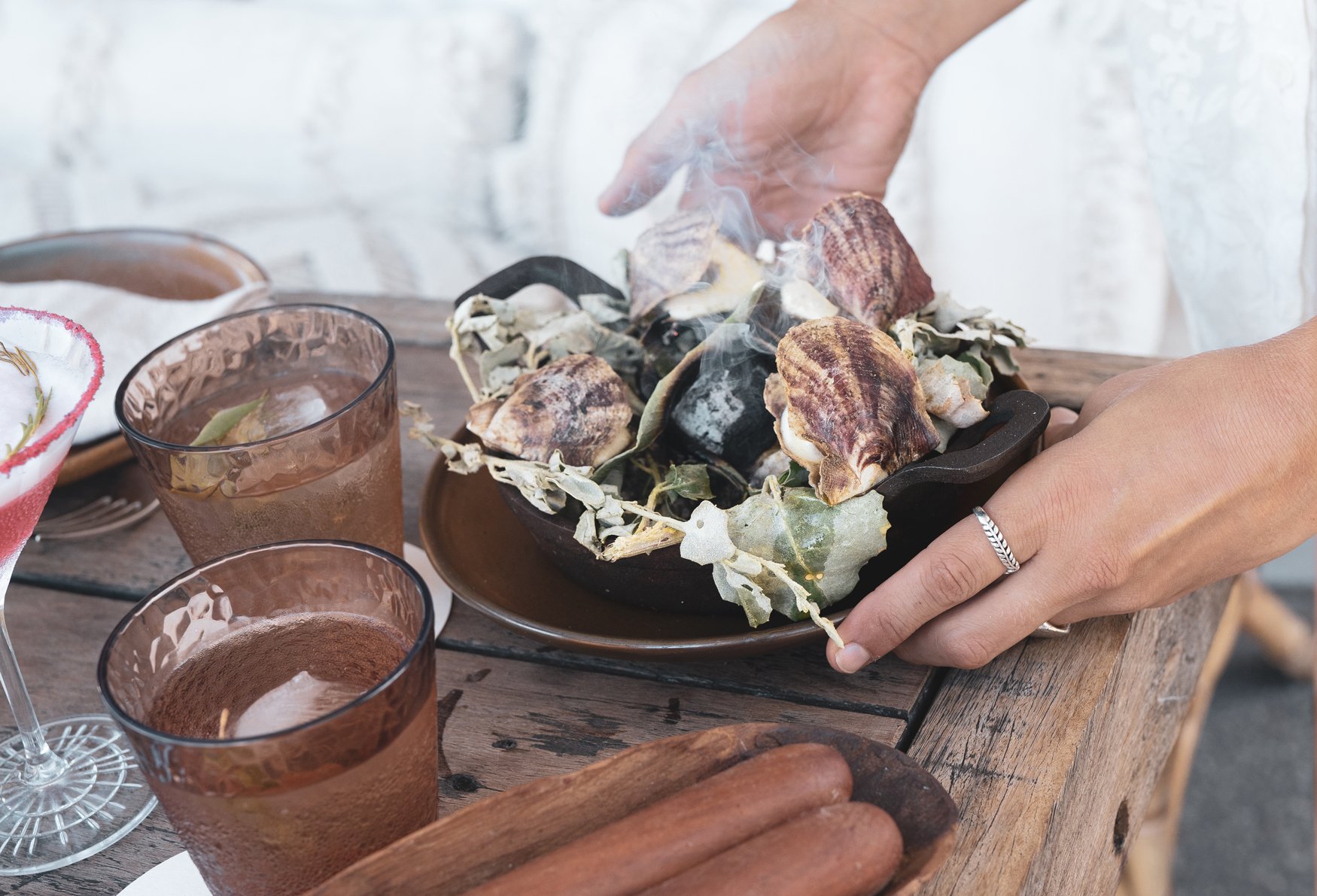
PAperbark smoked fish on betel leaf
“I want all Australians to be able to eat and appreciate our beautiful native foods. This isn’t just an Aboriginal story, it’s an Australian history and a world history. I think if it was taught in school, we would be incredibly proud to stand on a world stage and tell the story of our food, but instead we’re caught up in meat pies and sausage rolls when we actually have the oldest food culture on the planet and we should be celebrating that!”
Highlighting native ingredients on the menu
Matt Morgan is group executive chef for Luke Mangan Company, having started working with well known chef Luke at Glass Brasserie at the Hilton Sydney before moving into the role of his assistant R&D chef, then stepping into his current position post-Covid. Luke himself is known as a staunch proponent of Australian native ingredients and Matt says his focus is highlight these on the menu wherever possible.
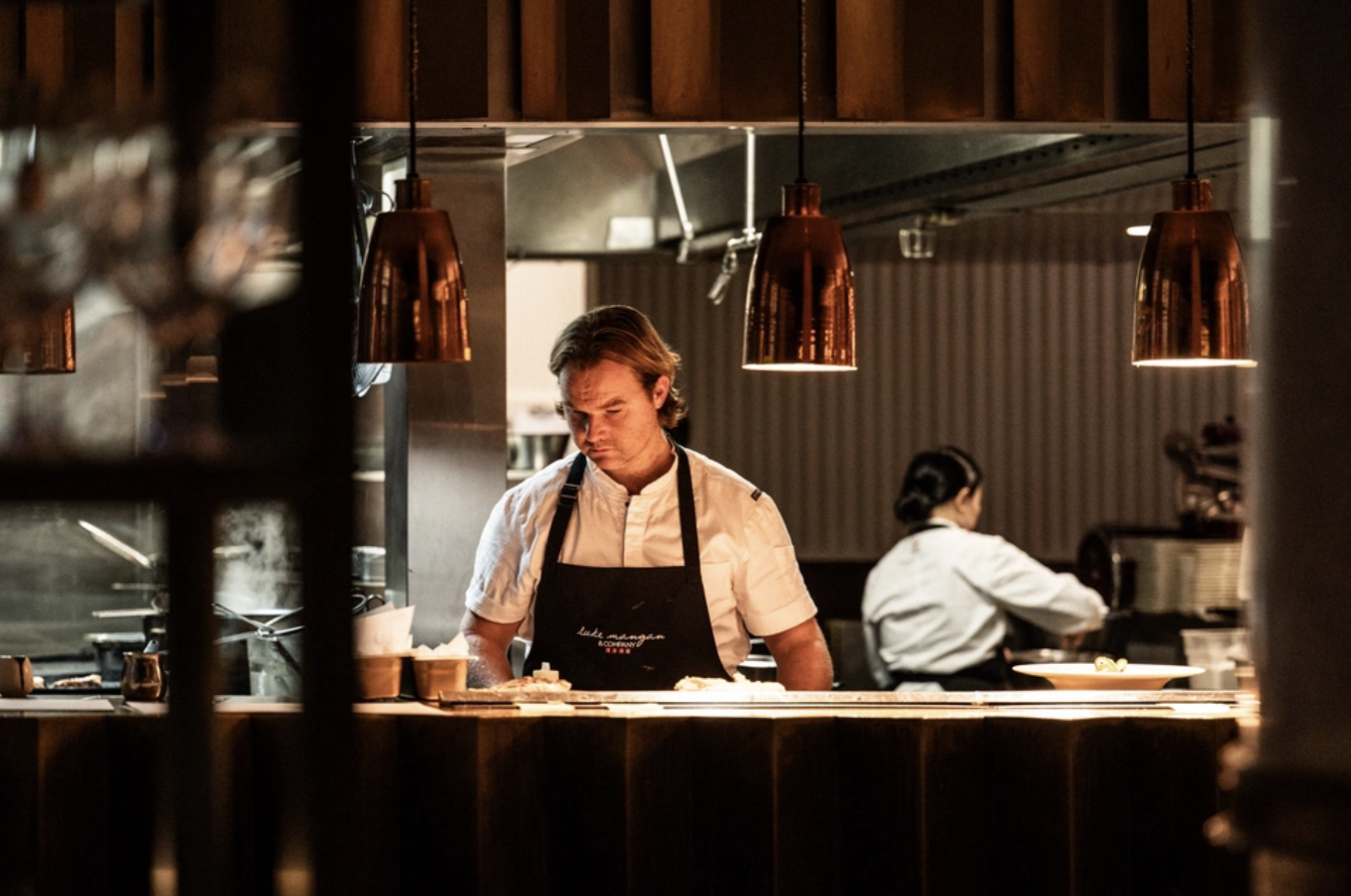
Luke mangan company group executive chef matt morgan
“Many of them have a like for like taste profile with ingredients that we see saturating the menu,” Matt points out. “For example, lemon myrtle makes a fantastic marinade for lamb rump, we’ll use rosellas instead of raspberry or strawberry on a classic cheesecake because they give a beautiful tartness when poached in a sugar syrup with some cinnamon spices. It’s much the same approach as you would use with a strawberry but with a touch longer cooking time. We’ll also use cinnamon myrtle and wattleseed through the cheesecake base which gives a distinctly earthy, natural flavour.”
Learning from shared stories
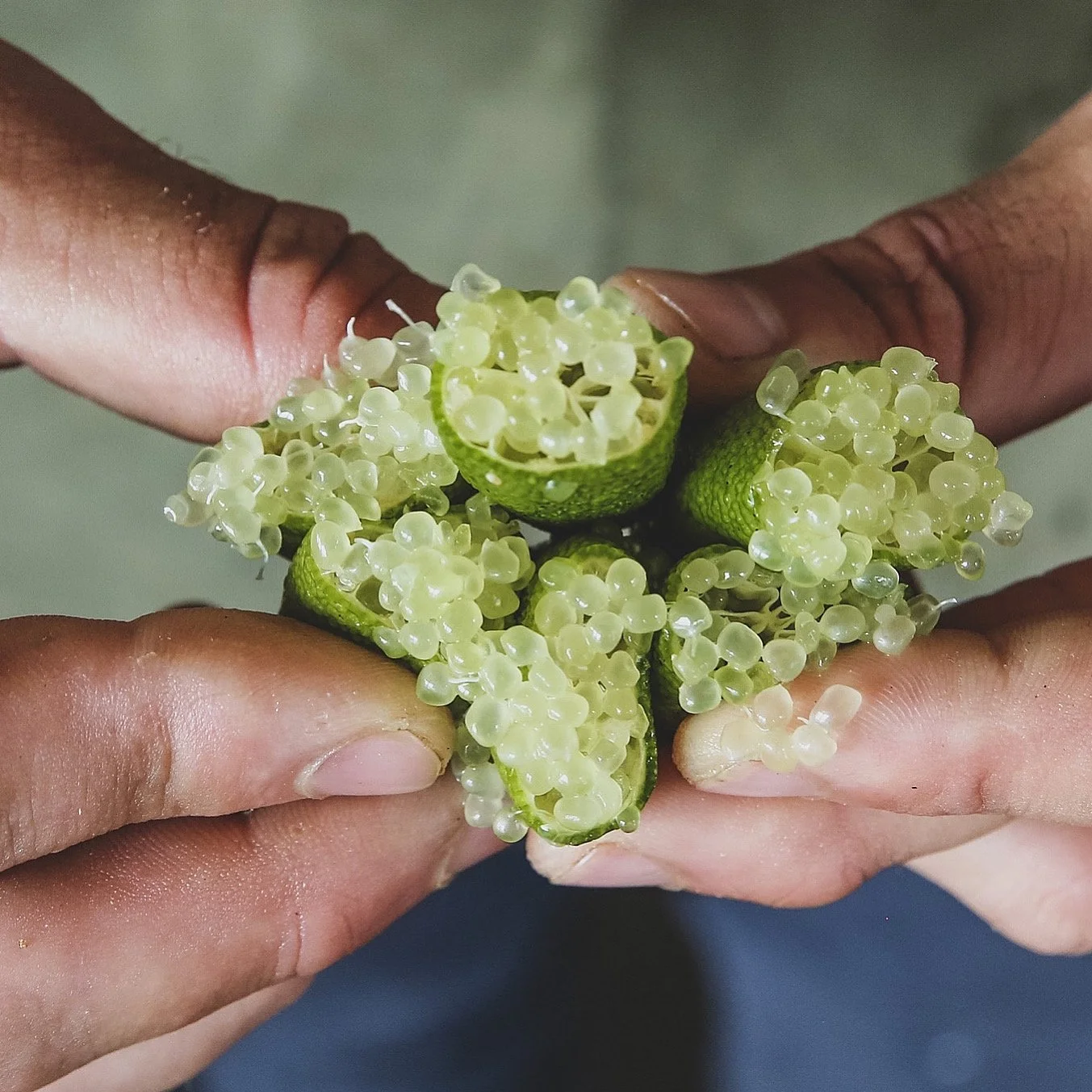
native Finger lime
Matt says his favourite native ingredient is “without a doubt, finger limes - you can put them through a simple ginger syrup and over a sashimi or soba salad and they’ll impart a wonderful pop of acidity. We did an event with TV’s 60 Minutes in 2018 where we wanted to highlight the use of goat as one of Australia’s biggest meat exports – we went out to Gundagai in southern NSW and cooked up a goat curry with salsa verde. Instead of coriander or parsley we used all native Australian herbs – saltbush, cinnamon myrtle, lemon myrtle; instead of raisins soaked in port we used port-soaked muntries, and we cooked it all up out in the countryside over an open fire. It was amazing and I think it got a wide audience thinking about how we can make more use of these ingredients.”
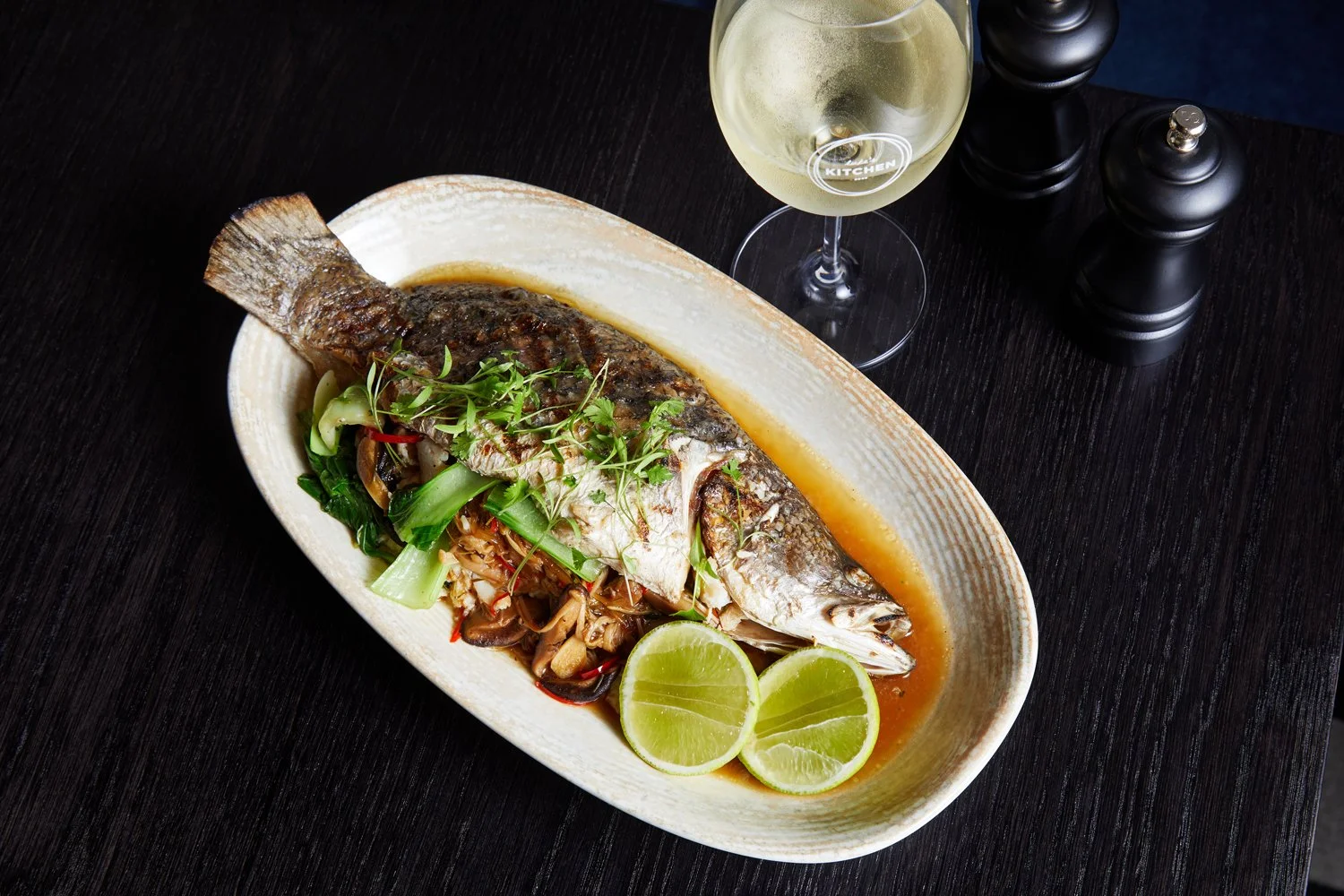
NATIVE Barramundi from luke mangan company
Matt’s familiarity with native ingredients has been enhanced through Luke Mangan Company’s involvement with NACI while working at the Kimpton Margot Sydney hotel. “NACI CEO Nathan Lovett has brought in some really talented apprentice chefs to work with us – and we’ve heard about their backgrounds, they’ve shared their stories and it’s been eye-opening. I grew up on the NSW central coast, and we had a young fellow from NACI who’d also grown up there and he was telling me about how he fished up there with his grandparents and the techniques they used.
So many applications to find
“I compared it with my own experiences of fishing as a kid and it was very enlightening – I really hadn’t realised how far back native culture extends, so learning from the interaction has been great. You can sense their passion for their community, or mob, as they say, and finding out about the food aspects of native culture is a very enriching experience for any chef.”
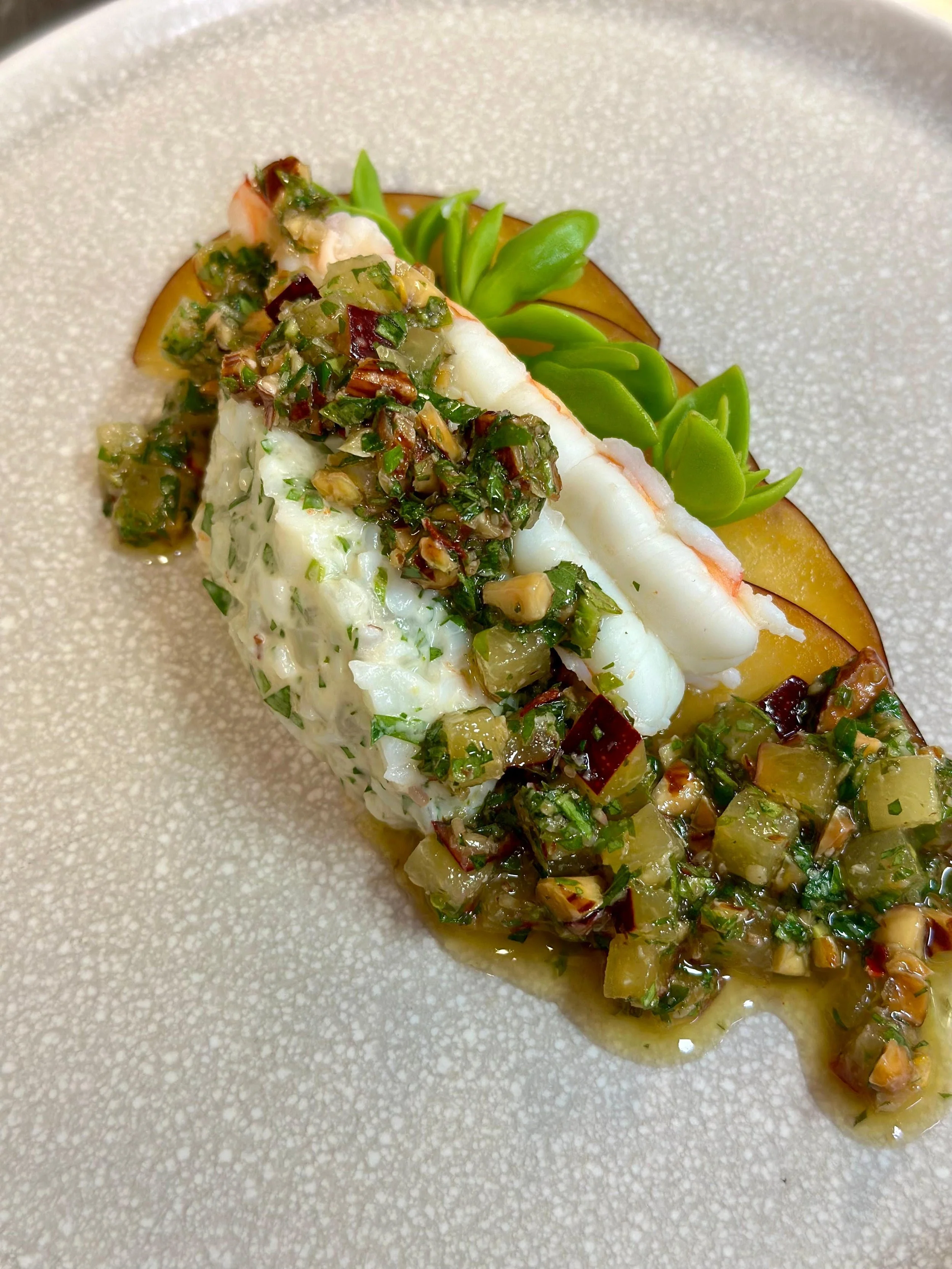
Moreton Bay Bug rillette with prawn and karkala
In addition to working with native spices, Matt and his team are now looking at native seafood – “from Murray cod to barramundi, golden perch, silver perch and Australian bass – these fish are native to our shores and we sort of forget that.
“We use barramundi as a simple grilled fish, we’ll serve perch and Moreton bay bugs with a beautiful ginger and finger lime dressing; we’ll make a quandong mignonette for use on our oysters.
“There are so many applications you can find for native foods if you think about it first and then use them to inspire your menu choices. And really, subbing those ingredients in should be top of mind.”
Related Articles