Young chefs seize professional development opportunities through competitions and mentoring
/Sous chef Ashleigh Handsaker reflects on her six-year journey through the Nestlé Golden Chefs Hat Award, culminating in her 2026 Golden Chef of the Year win, while Proud to Be a Chef Resident Mentor and Executive Chef Mark Normoyle shares how the program continues to expand professional development opportunities for apprentice chefs.
Foodservice Rep takes our annual look at the opportunities which exist for professional development and further education among chefs – from participation in culinary competitions like the long-established Nestlé Golden Chefs Hat Award to the industry’s leading foodservice mentoring program for apprentice chefs, Proud to Be a Chef.
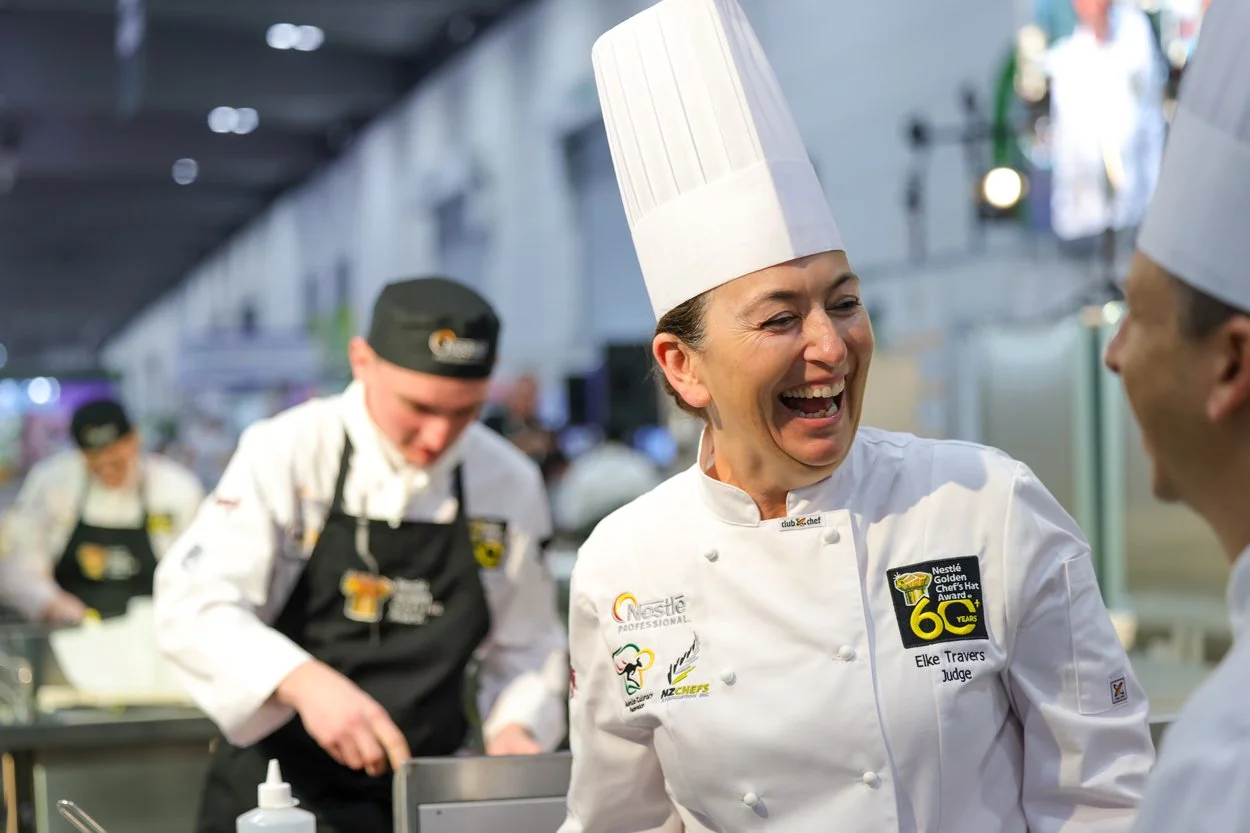
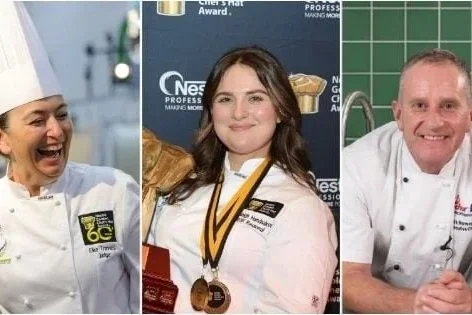
Nestlé Professional Executive Chef and Golden Chefs judge Elke Travers
The Nestlé Golden Chefs Hat Award is Australia’s longest running culinary competition for young chefs, with the grand finals held at each year at the Fine Food Australia show. “The talent this year was next level,” says Nestlé Professional Executive Chef and Golden Chefs Hat judge Elke Travers. “All our finalists were well trained, pushed themselves to the limit and worked really hard to get their passion onto the plate. Every element was so refined that the judging was neck and neck in some places!
“I think this was one of the closest-run finals I’ve ever seen because everyone was pushing the boundaries. The camaraderie on display was incredible and that was really the best takeout for me – this was a bunch of strangers from around the nation and from New Zealand, and by the end of the competition they’d built such strong relationships, and they went above and beyond, taking the whole team along for the ride and aiming high for the entire duration of the event.”
Ashleigh Handsaker: ahead of the game
There were 18 gold medals awarded (55 per cent more than last year), with three won by 23 year old sous chef Ashleigh Handsaker who was crowned 2026 Nestlé Golden Chef of the Year. “Ashleigh was ahead of the game with her awesome entrée of mushroom and potato empanadas with pickled pumpkin ribbons, and her main had extra elements that really took her across the line,” Elke says.
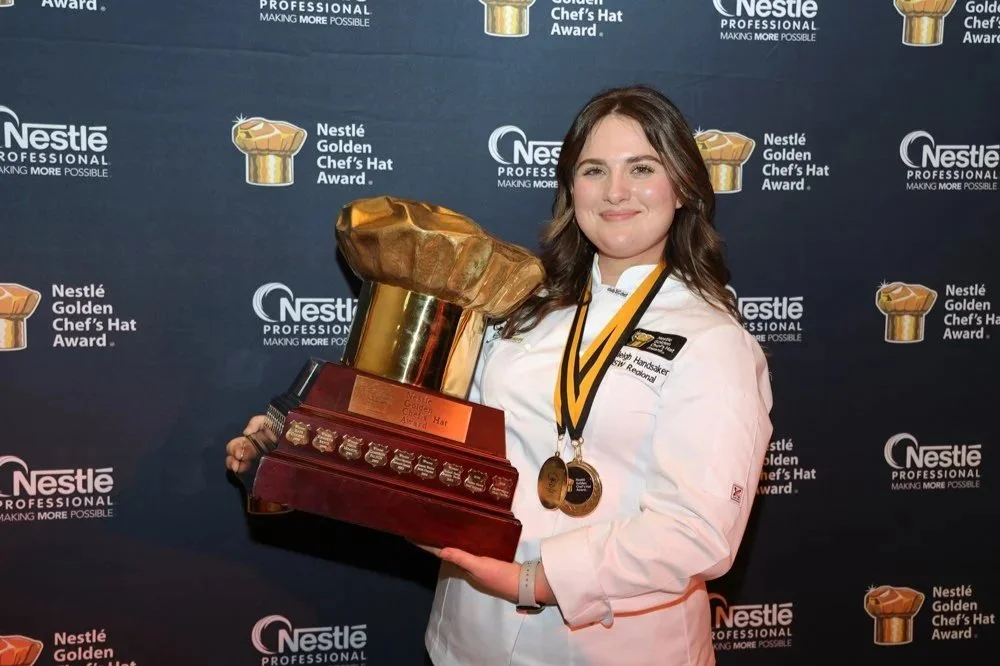
2026 Nestlé Golden Chef of the Year Ashleigh Handsaker
“This was her sixth year competing in Nestlé Golden Chefs – she really pushed her skillset and her presentation and plating was amazing. I spoke to her before the final and she wasn’t sure about her entrée, but in the end all three dishes were terrific and really well balanced. She certainly showed how much she’s grown over the years – you could see it not only in her performance but in the way she encouraged her team as well, making sure they were all set up for success.”
“When I won a bronze in the first year, I fell in love with the experience”
Having made it through to the finals five times now, Ashleigh attributes her win this year to hard work, practice and a clearer headspace. “Having gained a bit more maturity over the years has helped a bit, along with taking on board the judges’ feedback from previous finals and then going in cool, calm and collected,” she says. “When I was a first year apprentice I was very nervous and fresh to the industry whereas now I’m working in management and you learn to adapt to the adrenalin. Plus the more you compete, the more experience you gain.”
“Everything has to fight to be on the plate”
Ashleigh was about three months into her apprenticeship when she first applied to compete in Nestlé Golden Chefs Hat. “I found out about it from a TAFE email and I’ve always liked challenging myself so I decided to give it a go. When I won a bronze in the first year, I fell in love with the experience and I also thought it would be a great way to build my personal brand because it gave me good publicity. Julio Azzarello, who’s been my chef mentor since I was 18, deserves a lot of props for inspiring and supporting me when times have been hard, along with my first boss who was very supportive, ordering ingredients for me to practice with and letting me come in to use the kitchen on my fays off.”

“You’re working to a very tight timeframe so you need to make the best of what you have”
One of the things Ashleigh has learnt from her years of competing is “everything has to fight to be on the plate”: “You have to be disciplined about what you actually place. Rather than have eight or nine components, some of which are sub-par, it’s better to have just four or five which are all done perfectly and in harmony. It takes a lot of practice because you can get carried away with your ideas – you have to learn how to filter and refine them down to a simple art. You’re working to a very tight timeframe so you need to make the best of what you have. Each year I competed I watched all the other chefs and you learn something from all of them – really cool ways of doing this or that. Over time you pick up how to simplify things and be as prepared as possible. The first year I competed I was so messy – I thought I was organised then but I look back no and say God, no! The judges give you great feedback and this year they said ‘Wow, you really listened to us’ – but what’s the point of them telling you unless you listen and learn what you have to fix?”
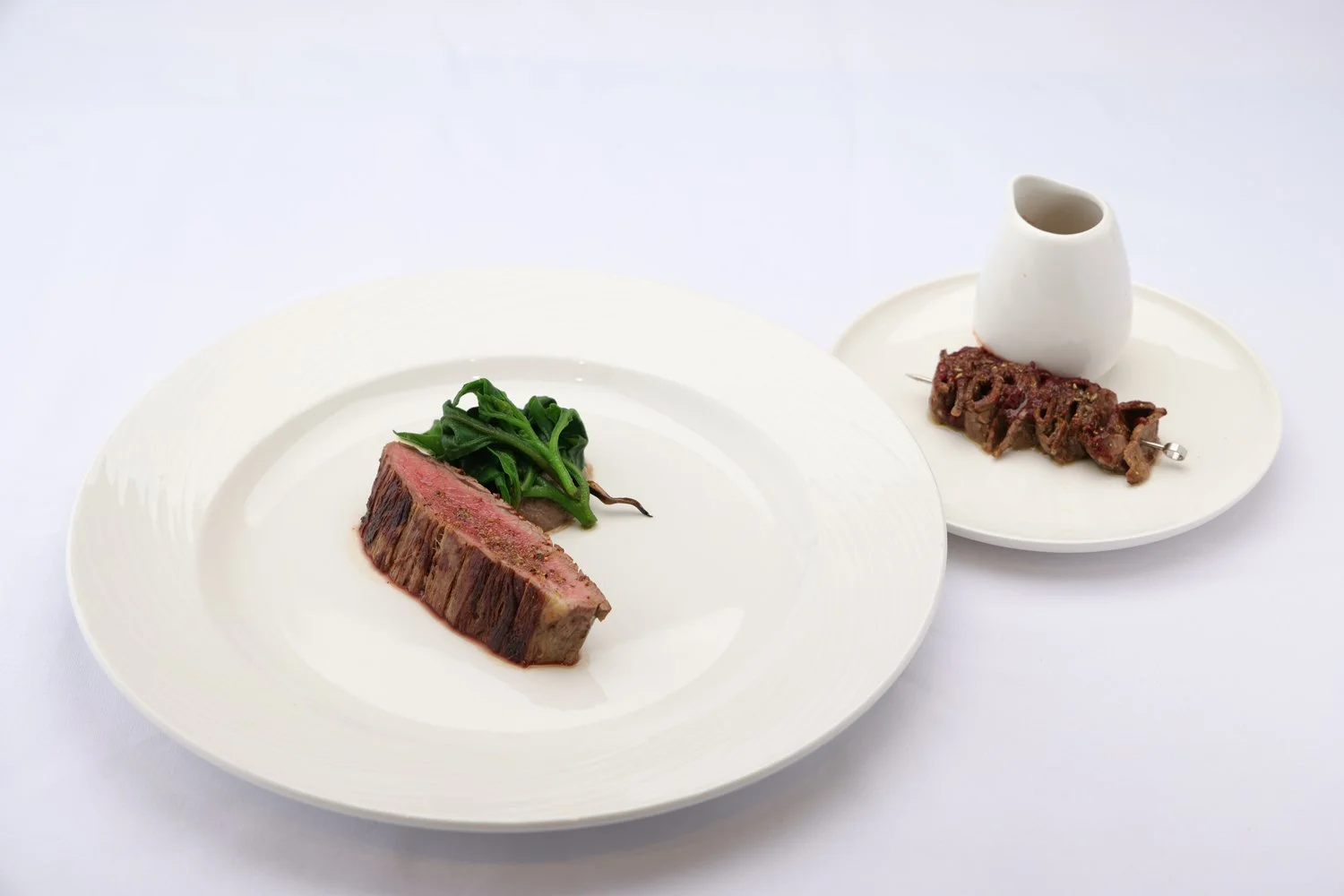
ASHLEIGH’S winning mainS: beef flank with eggplant puree, candied eggplant, warragal greens, and a raspberry-glazed beef skewER WITH DATE JUS
Ashleigh’s winning menu featured an entrée of mushroom and potato empanada with grana padano crema, pumpkin puree and pickled pumpkin ribbons; a main of beef flank with eggplant puree, candied eggplant, warragal greens, and a raspberry-glazed beef skewer with date jus; and a dessert of honey vanilla cremeux with basil sweet crumb, coconut jelly, lemon gel and chocolate tuile.
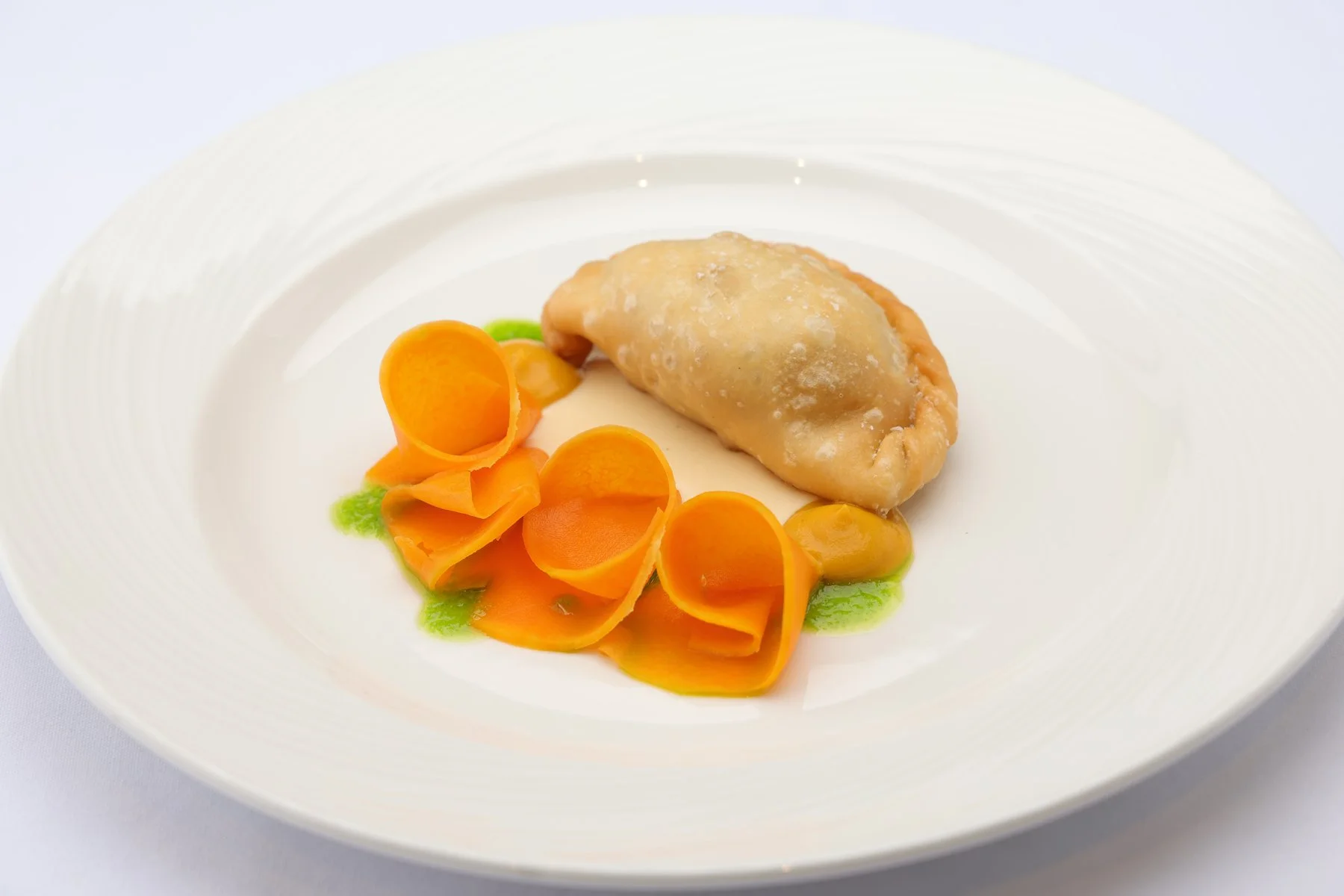
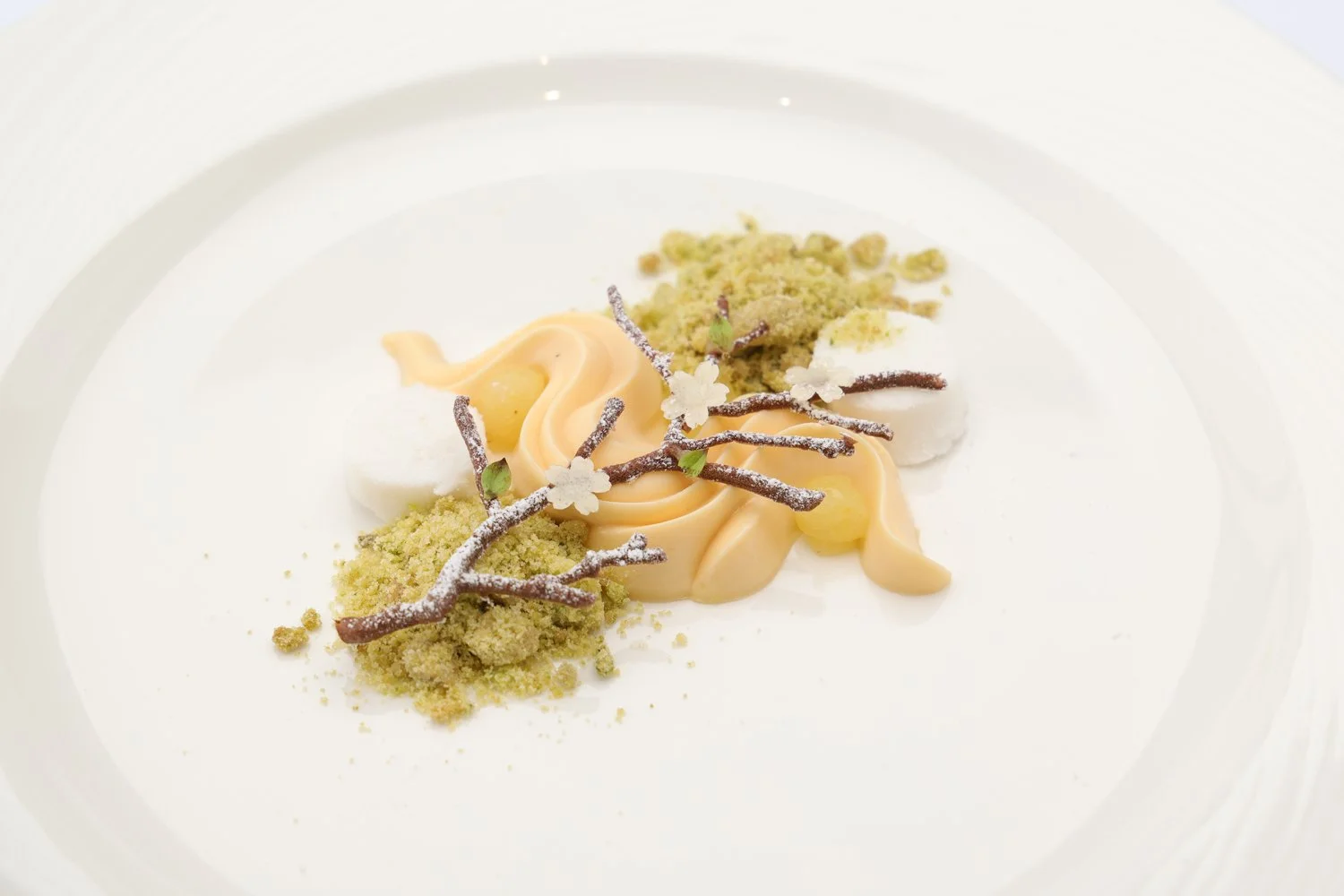
“Finding inspiration for the entrée in particular was really hard because I’d already done everything I could think of,” Ashleigh says, “so I took on board something we do at work which is a scallop and lobster empanada and put a vegetarian spin on it. For the main I wanted to do beef two different ways to showcase two cooking applications. For the beef skewer you have to freeze the meat first because it makes the proteins softer so you get a thinner slice.
“For the dessert, I went with what I’d prefer personally after a starchy entrée and a rich main, which is something light and refreshing. It was really just trying to find things I hadn’t done and asking if I bought it at a restaurant, would I like it?
“Everyone brings something different to the plate”
“I’ve worked with over 50 chefs now and you learn little bits from all of them because everyone brings something different to the plate. Julio is an inspiration and Lara Hagen, my head chef is fantastic and very empowering – she let me have two weeks off work prior to the competition to ensure I was ready to go. And my partner, who is our front of house manager, was a big support to me as well – he came to Melbourne to watch me compete, along with my parents, so I had my family there.”
“I’m looking at possibly doing La Chaîne des Rôtisseurs and being part of Australian Young Chefs for the Culinary Olympics”
Ashleigh’s longterm goal is to own her own restaurant focusing on local sustainably sourced produce and to be involved in training young chefs, especially females: “I want to empower them to be part of the industry and learn in a safe and comfortable environment. Before then, more comps and I’m entered into the Eustralis Pastry Chef Scholarship through the Hunter Valley Culinary Association, so we’ll see what happens with that. I’m looking at possibly doing La Chaîne des Rôtisseurs and being part of Australian Young Chefs for the Culinary Olympics. I won the Brett Graham Scholarship in 2022 and I still have to organise my trip to London to work with him, but in the meantime I’m going to one of the judges for this year’s Scholarship next month!”
Proud to Be a Chef program continues to innovate
Apprentice chefs also have a terrific opportunity for professional development by participating in the longstanding Proud to Be Chef mentoring program. Each February 32 finalists travel to Melbourne for a four-day, all expenses paid experiential journey of masterclasses, skills workshops, dining at prominent restaurants and invaluable networking opportunities with peers and industry leaders.
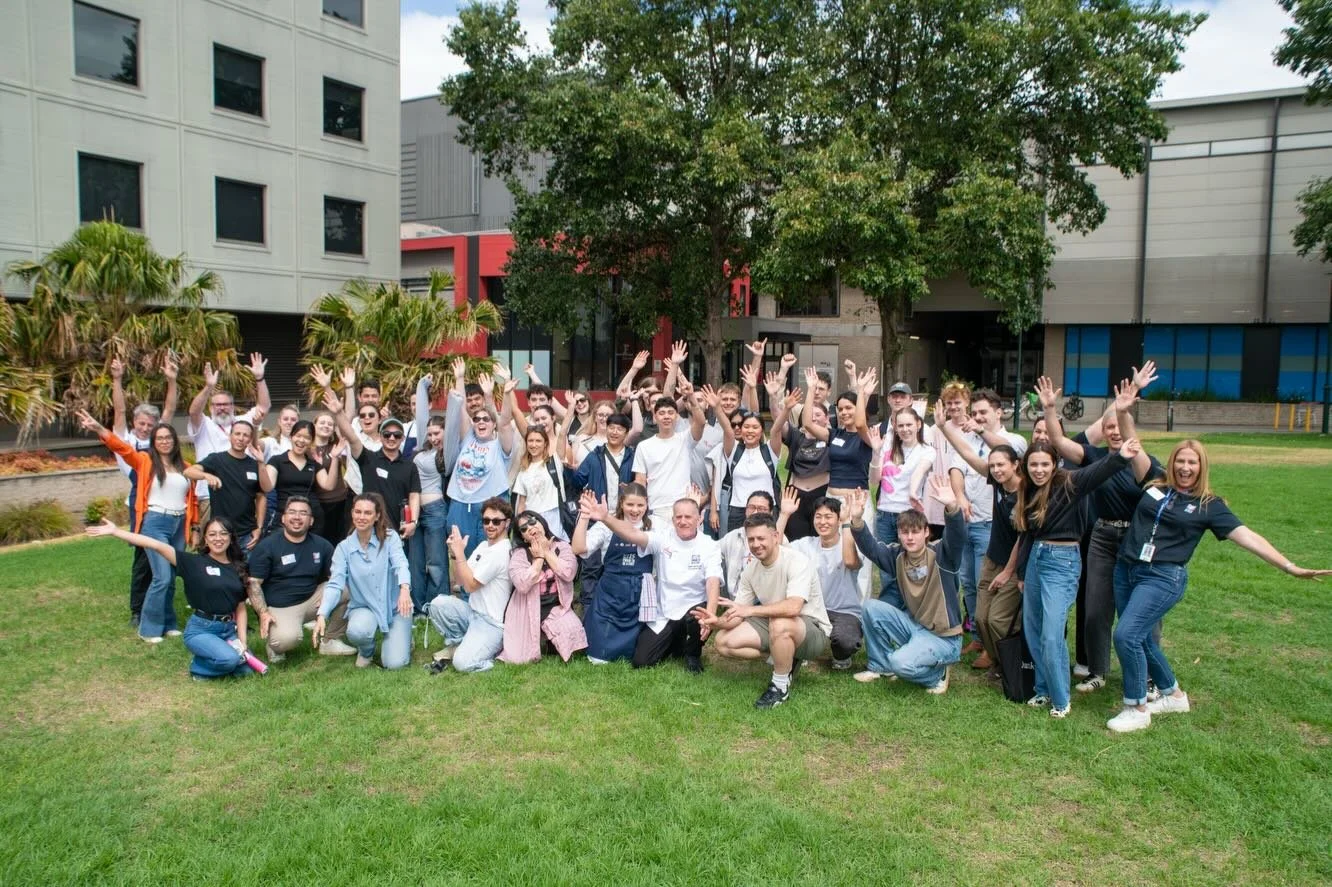
Proud to Be a Chef Resident Mentor and Executive Chef Mark Normoyle is busily working behind the scenes on the upcoming program. “We strive to keep making the program better each year and one of the things we did for 2026 was make the application process more digital and social-media friendly. In the past we had written applications, but now we’re asking applicants to make a video of themselves talking about their food journey and career aspirations, and we also ask them to submit a referee from their chef or teacher mentor telling us why they’re deserving of being placed in one of our 32 spots. This makes it more of a team effort, in that their chef or trainer know they’re applying, and it shows us they have a mentor at work to support them during the process.”
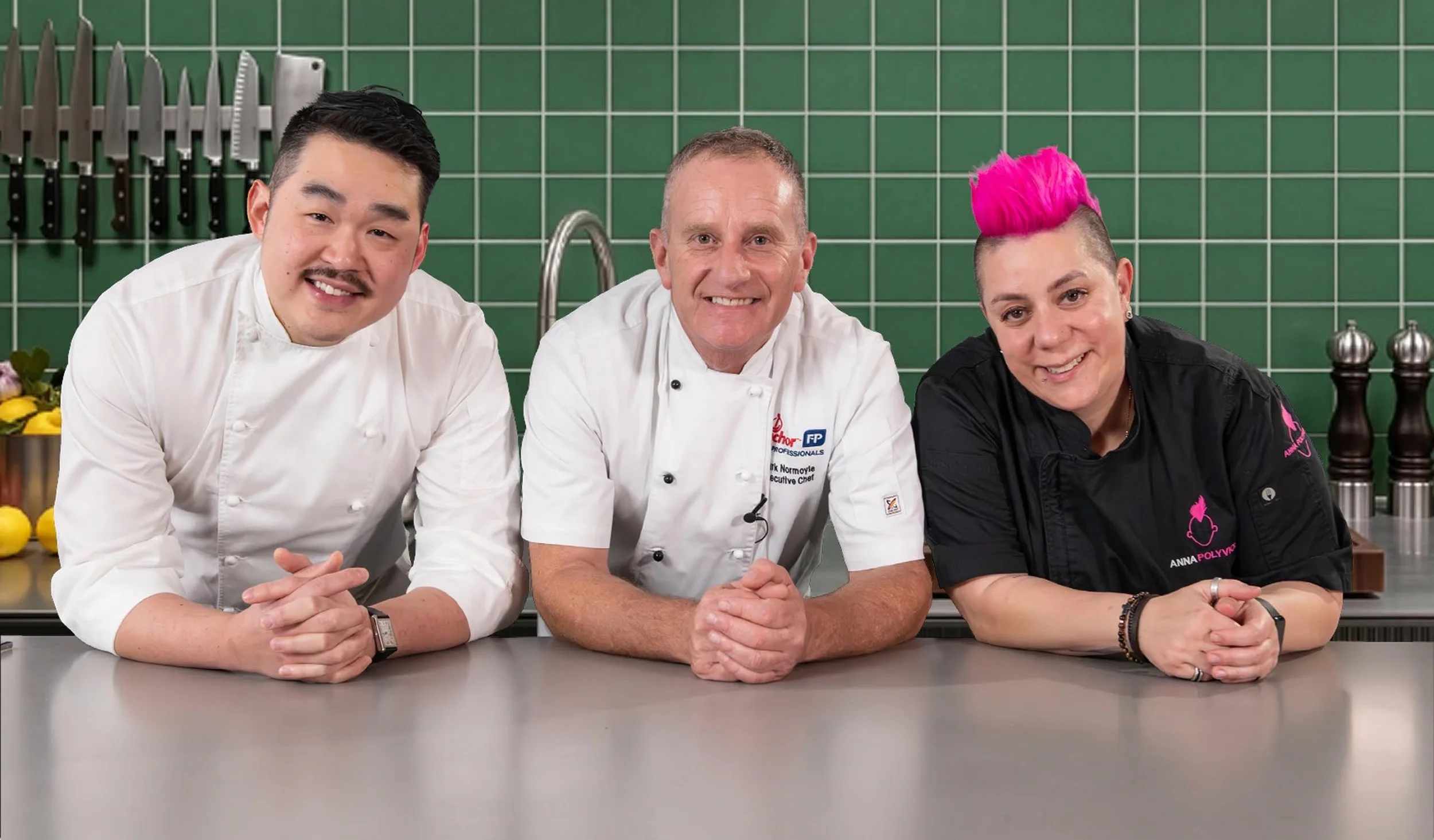
Proud to Be a Chef Mentors: Joachim Lim (L), Mark Normoyle (centre) & Anna Polyviou (R)
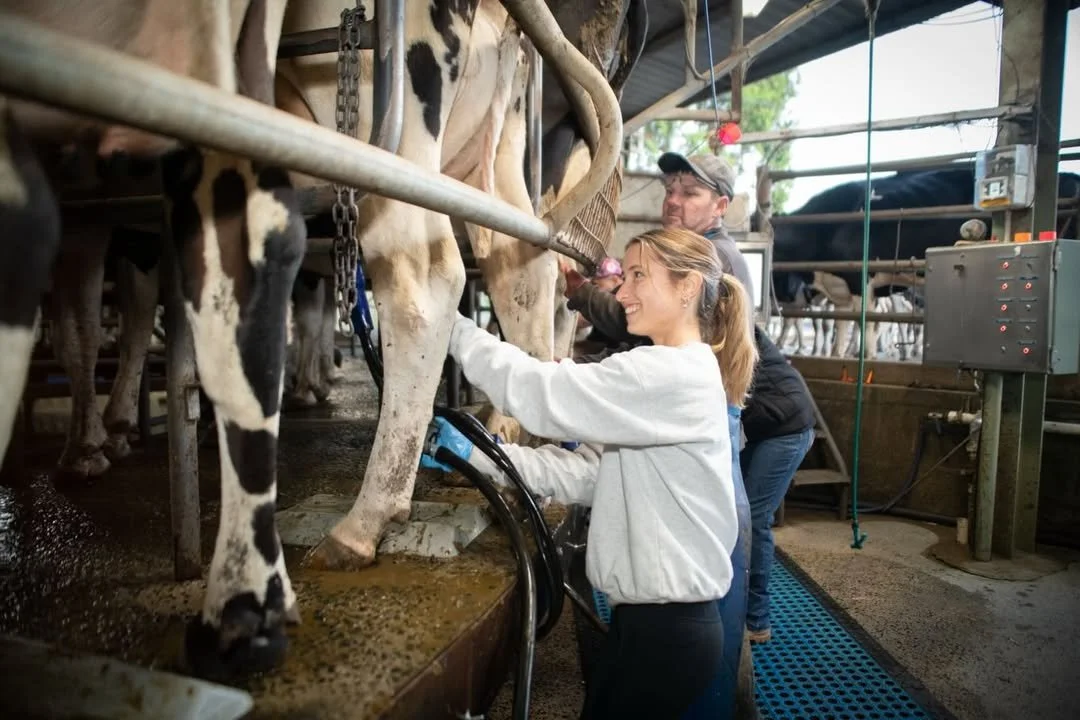
Last year applications were accepted from New Zealand for the first time, with eight finalists hailing from the land of the long white cloud including Best Dessert Winner Emily Morgan, and applications are again open to NZ this year. “We’ve also grown our links with Japan and we’re bringing over a specialist Wagyu butcher for a masterclass so our finalists can see how wagyu is traditionally reared and cared for,” Mark tells us. “Our social media award winner will be getting a five day trip to Japan looking at food culture and visiting wagyu sourcing regions. And of course we’ll be doing our usual trip to a dairy farm right here in Victoria, where our finalists will have a chance to milk a cow and see amazing dairy products being made at the source.”
“The mentoring begins as soon as we’ve picked the finalists”
Focused on building alumni
Mark makes the point that what sets Proud to Be a Chef apart is that – notwithstanding the final days’ cook-off – it’s not a cooking competition but a mentoring program. “The mentoring begins as soon as we’ve picked the finalists – I’m currently mentoring them on how to develop their recipe ideas step by step, how to standardise these for a kitchen, and how to go from a concept to something that can go into a cookbook for another chef to replicate.”
He attributes much of the program’s success to its guest mentors. “Joining me each this year will be Joachim Lim, who is the Head Chef at Melbourne’s acclaimed Society restaurant, and the amazing pastry expert Anna Polyviou.” (You can read our separate article on Anna here).
Mark adds, “We’re also very focused on building our alumni, inviting back previous winners and finalists who will be helping to cook the welcome lunch for our latest finalists and acting like mini-mentors. Well known chef and trainer Glenn Flood, who has been our MC for the past couple of years and is a great supporter of the program, is offering his own Accelerator Award to one of our finalists, which will be a one on one mentoring program with him for 12 months. Innovations like this are all ways to extend the program beyond the four days in February and make it an ongoing part of our finalists’ lives.”