Clean kitchens save businesses: why professional chefs deep clean after every service
/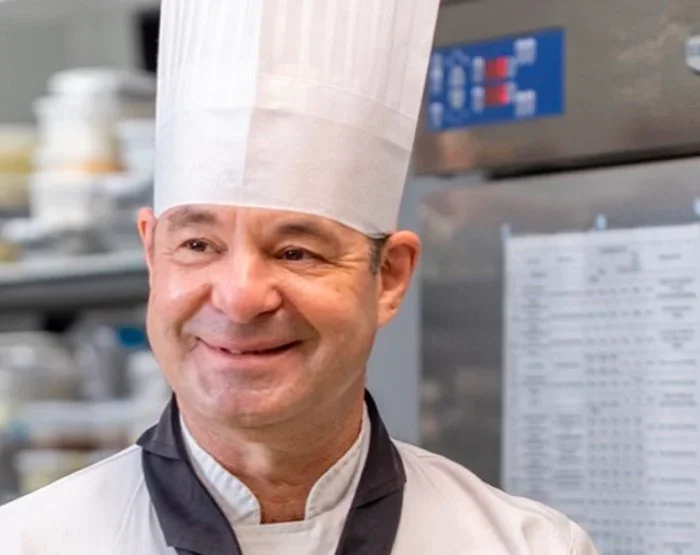
By Chef Jeffrey R. Gear – President Australian Institute of Technical Chefs
In every successful commercial kitchen, whether it’s a small café, aged care facility, hotel, restaurant, club, hospital or largescale catering operation, there’s one principle that never changes – a clean kitchen is a safe kitchen.
Many people see the finished meal placed before a customer or resident and admire the presentation, flavour and skill involved. What they don’t see is the work that occurs after service has finished. Professional chefs understand cooking is only half the job. Cleaning, sanitising and maintaining the kitchen are equally important.
Commercial kitchens operate under strict food safety legislation, HACCP principles, workplace health and safety requirements and industry best practice standards. Simply washing the floor and turning off the lights is not enough. Professional kitchen teams undertake a structured cleaning and sanitising process after each service to ensure the kitchen is safe, hygienic, and ready for the next production period.
Cleaning versus sanitising
One of the most misunderstood concepts in hospitality is the difference between cleaning and sanitising.
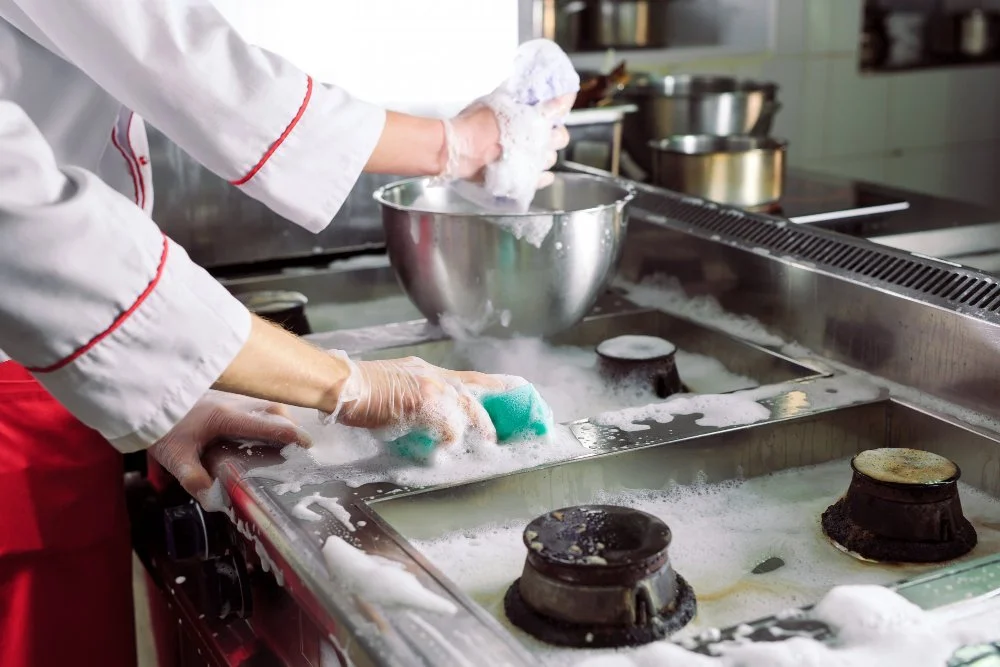
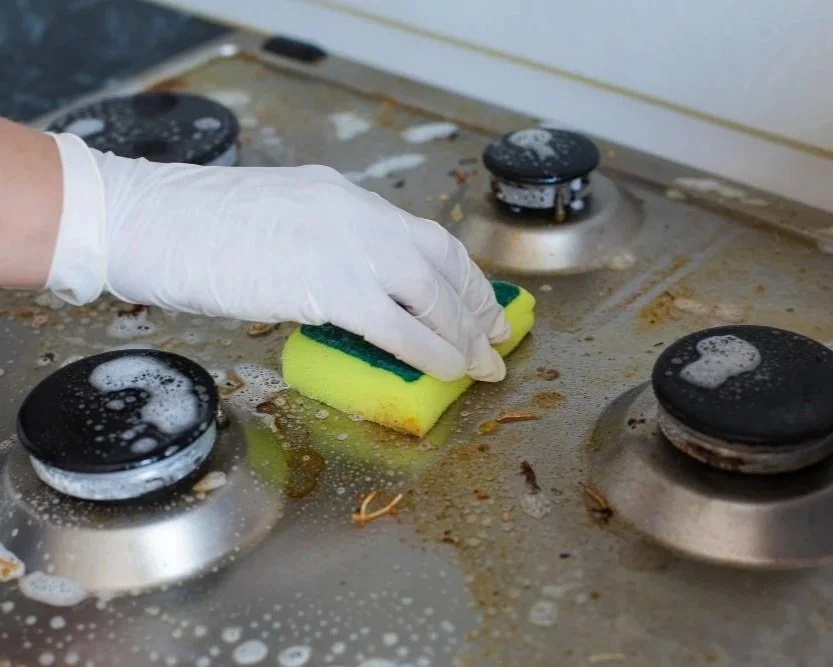
Cleaning removes food particles, grease, dirt, and visible contamination.
Sanitising reduces harmful microorganisms to safe levels using approved chemicals or heat treatment.
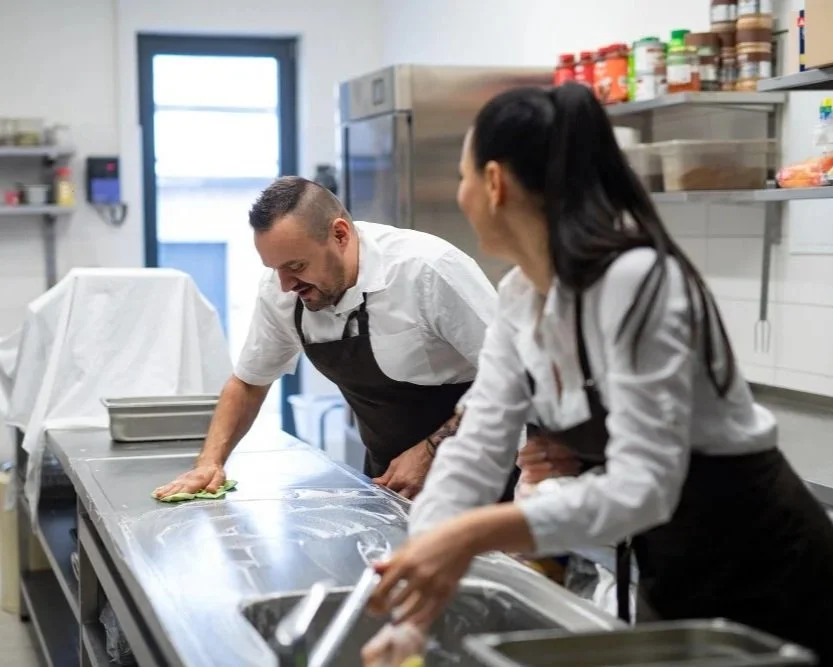
A surface may look clean, but without sanitising it can still harbour harmful bacteria such as:
Salmonella
Listeria
E. coli
Campylobacter
Staphylococcus aureus
Professional kitchens must perform both processes correctly.
Deep cleaning is part of the job
One of the greatest misconceptions about chefs is that they finish cooking and leave.
Professional chefs understand that cleaning is part of food production.
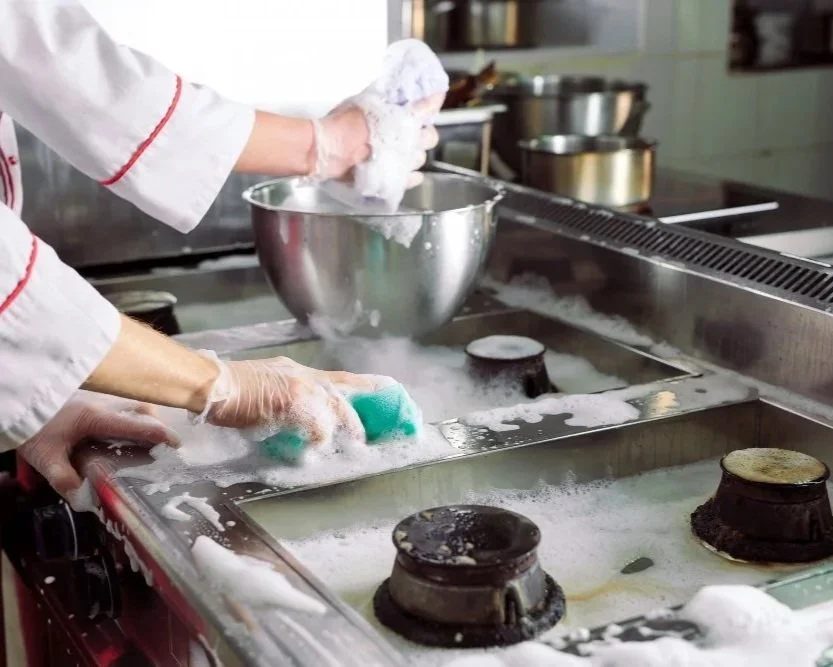
At the end of each service, kitchens often conduct deep cleaning tasks including:
Pulling equipment away from walls
Cleaning behind and underneath equipment
Cleaning exhaust canopies and filters
Cleaning cool rooms and freezers
Emptying and sanitising waste bins
Cleaning shelving
Descaling dishwashers
Cleaning drains
Sanitising door handles and high-touch surfaces
Many kitchens also operate scheduled weekly and monthly deep-cleaning programs.
Why deep cleaning matters
Failure to maintain kitchen hygiene can lead to:
Foodborne illness
Even a small amount of contamination can affect multiple customers or residents.
Pest infestation
Food debris and grease attract:
Cockroaches
Rodents
Ants
Flies
Pest activity can severely damage a business’ reputation and result in regulatory action.
Equipment failure
Grease, dust, and food residue shorten equipment life and increase maintenance costs.
Failed audits
Health inspectors, food safety auditors, and accreditation bodies expect kitchens to demonstrate effective cleaning programs and records.
Poor cleaning practices frequently result in non-conformances during inspections.
Building a culture of cleanliness
The cleanest kitchens are not necessarily those with the most staff.
They are the kitchens where cleanliness is embedded into the culture.
Professional chefs lead by example by:
Cleaning as they go
Maintaining organised workstations
Holding staff accountable
Following cleaning schedules
Conducting regular inspections
Training team members in hygiene practices
When cleanliness becomes part of daily operations rather than an afterthought, standards improve dramatically.
The professional chef's responsibility
A professional chef takes pride in every aspect of the kitchen.
That pride extends beyond the food on the plate.
A truly professional kitchen team leaves the kitchen cleaner than they found it. They understand that hygiene is not somebody else's responsibility. It is everyone's responsibility.
Customers may never see the work that occurs after service but they benefit from it every day through safer food, higher quality meals, better maintained equipment and confidence in the establishment they are dining in.
Final thoughts
The mark of a professional kitchen is not only the quality of the food it produces but the cleanliness and discipline maintained behind the scenes.
Commercial kitchens large and small must be cleaned, sanitised and maintained after every service. Floors should not simply be washed and forgotten. Equipment should not be left dirty until the next shift. Deep cleaning should be a routine part of kitchen operations.
The best chefs know that service does not finish when the last plate leaves the pass. Service finishes only when the kitchen is clean, sanitised, organised and ready to do it all again tomorrow.
Related articles