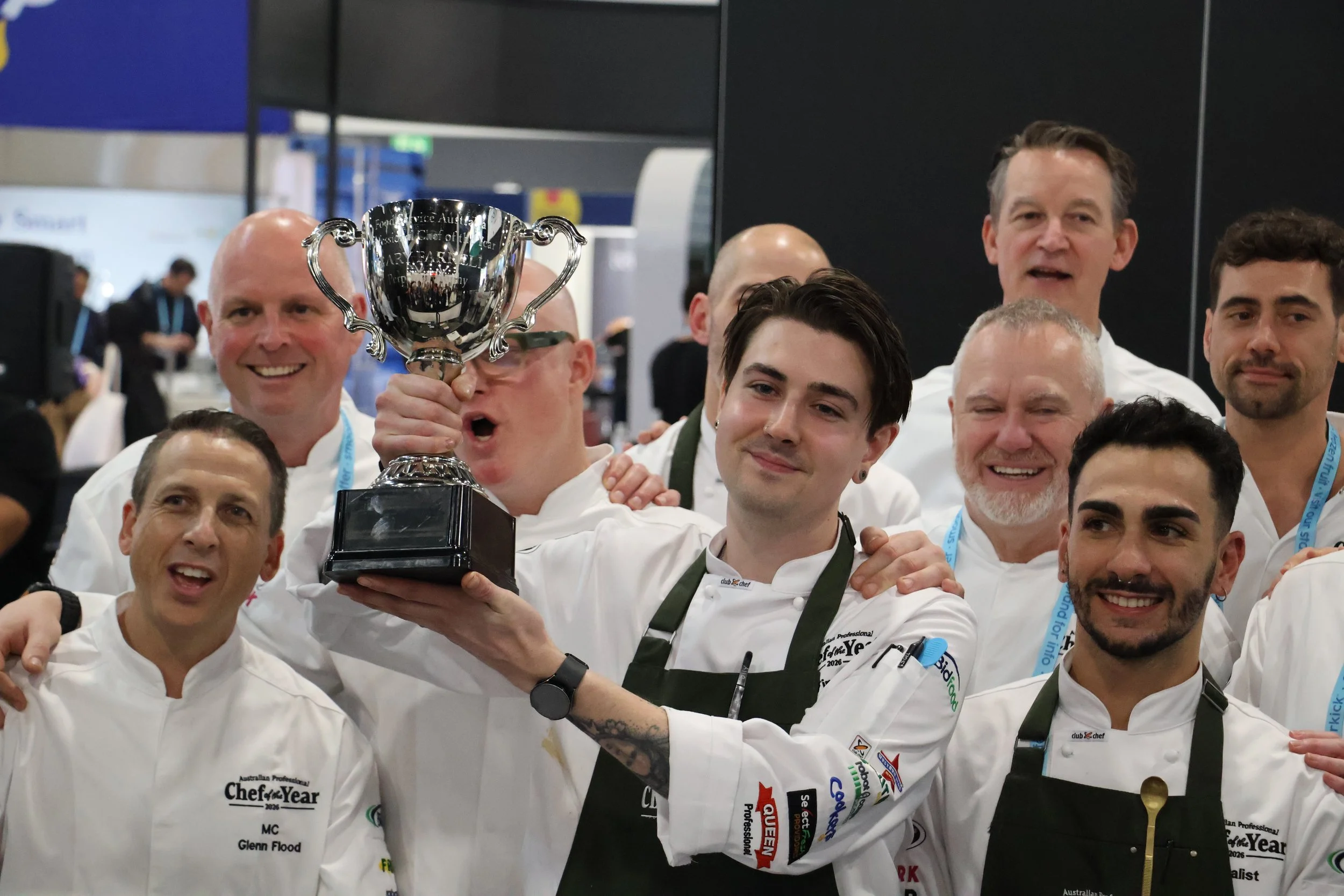
Gimlet’s Oliver Garrioch takes out Professional Chef of the Year title for 2026
/The Australian Professional Chef of the Year Competition, held annually each May as part of the Food & Hospitality Week tradeshow, sees the nation’s top chefs go head to head in a test of creativity, culinary knowledge and ingenuity, with the entrants whittled down to 20 finalists who have one hour to prepare dishes from a mystery box of ingredients. The winner receives not only the title and trophy but $6000 in cash; all heat winners get $500 cash and the four finalists are presented with a UNOX Ariana oven.
“It’s pretty intense because you only get told what your ingredients are 20 minutes before you cook,” explains Head Judge Jamie Gannon. “That’s your set up time, then you have to do four serves of an entrée and main, including plating, all within an hour.”
He adds the format was tweaked for this year’s event: “It used to be just that the winner of each heat would go through to the next round, but we found we were losing some great chefs early on if they happened to be in a stronger-performing heat. So this year we looked at the overall scores of all the contestants to ensure the top non-qualifying scorers made it through to a redemption round.”
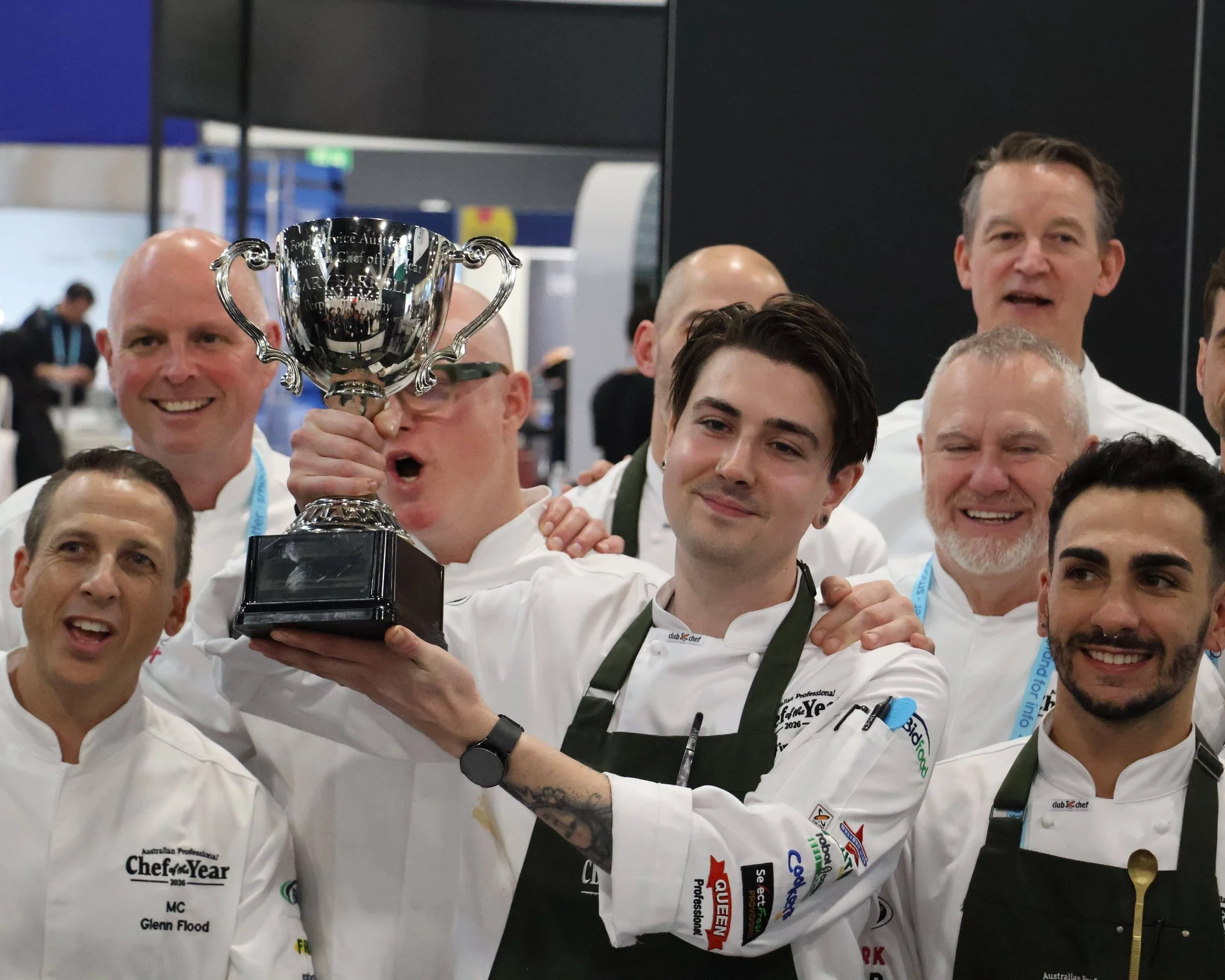
Australian professional chef of the year 2026, oliver garrioCh
Competing across three consecutive rounds
This year’s winner, Oliver Garrioch, benefited from the new approach in that it was his redemption round performance which got him through to the grand final. But this meant Oliver had to compete across three consecutive rounds – which brought an extra level of challenge to both his creativity and his nerves!
Currently chef de partie at upmarket Melbourne restaurant Gimlet, Oliver has always loved cooking – “my parents were both chefs and they were away working quite a lot during my childhood, so I was glad for any opportunity to spend with them, and often that was in the kitchen,” he recalls. After a stint in his father’s café for work experience in Year 11, he secured an apprenticeship at Brisbane function centre Hillstone St Lucia. Stints at Cumulus Inc and Cutler and Co followed before Oliver took up his position at Gimlet two months ago
This was Oliver’s second crack at the Professional Chef of the Year title – he made it to the grand final in 2024 but lost out to Tommy Prosser. “The first time around I entered with no real intention of winning,” Oliver recalls, “I was just happy to be competing. But that meant that this year I was able to take my experience and understanding of how the competition works from last time and build on that.”
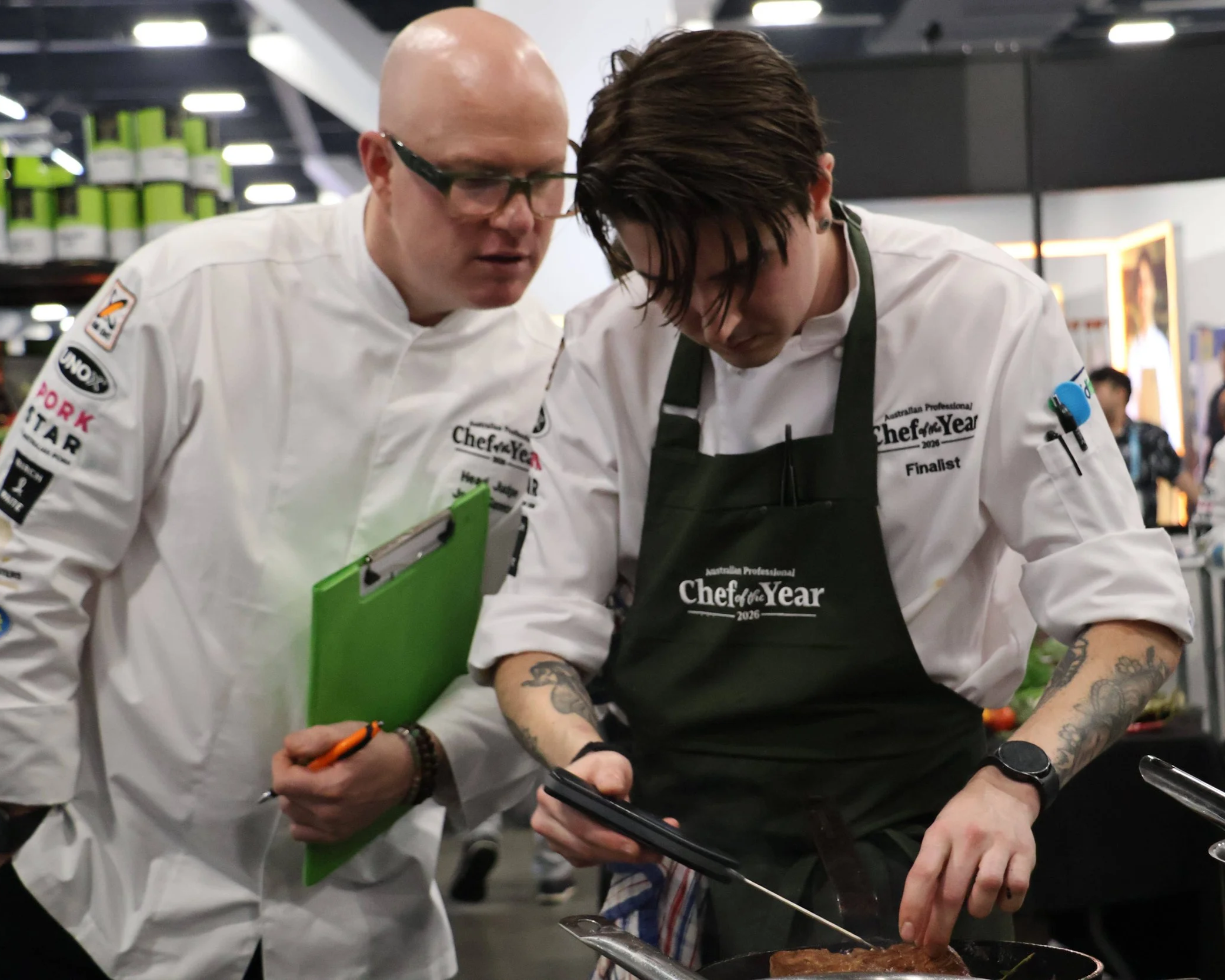
HEad Judge Jamie Gannon (L) & oliver garriOCh (R)
“Oliver was cool and calm and he absolutely nailed it”
Head Judge Jamie Gannon says, “When Olie competed in 2024 he was very good but he wasn’t quite there and the feedback we gave him was along the lines of ‘less is more’ and ‘just be yourself’. When he came back he showed he’d really taken that on board because he was cool and calm and he absolutely nailed it.
‘Keep it simple’ approach pays off for Oliver
“Thanks to the quality of our sponsors, our core ingredients were really terrific this year and we found some of contestants were riding on that, like plating up a beautifully cooked piece of pork with some jus and vegetables but not really showcasing their own creativity. Whereas Olie’s food was the kind of dish you’d be happy to pay $50 for in a restaurant.
“That said, doing three heats back to back was tough and a few people were saying ‘he’s going to get fatigued’ but no, he was in the zone – I think it helped him actually!”
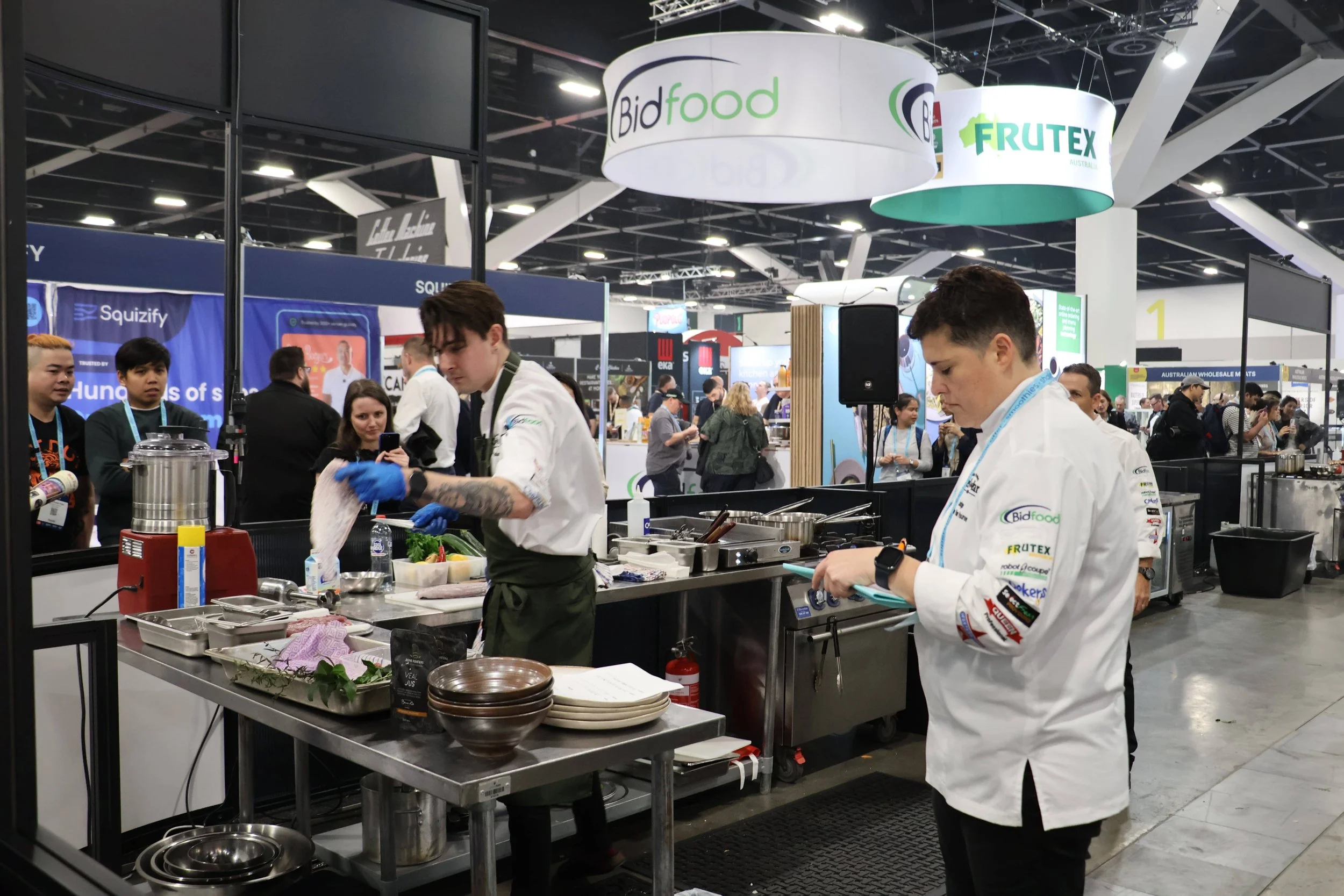
oliver garriOCh (L) & FSR Consultant Chef Claire van Vuuren
“I tried to keep it really simple this time,” Oliver says of his approach to this year’s competition. “I didn’t bring a lot of flashy kit, I was more interested in seeing what ingredients were at my disposal and using the available equipment. I was in the second heat on day two and made enough points to progress to the redemption round, and went from there into the grand final which was amazing but exhausting. I was a bit blown away each time my name was called, to be honest!”
He acknowledges the back to back competing tested his creativity – “I was pretty warmed up by the redemption round, so my adrenalin was flowing, and we rolled into each round so there wasn’t really a break. For my redemption round I had a pork loin to work with, which I’d just used in the previous heat so I was stressing a little bit about how to come up with a different take on it. In the end I didn’t change my approach to cooking it that much, it was rather my choice of what it was served with.
Tried and true cooking techniques
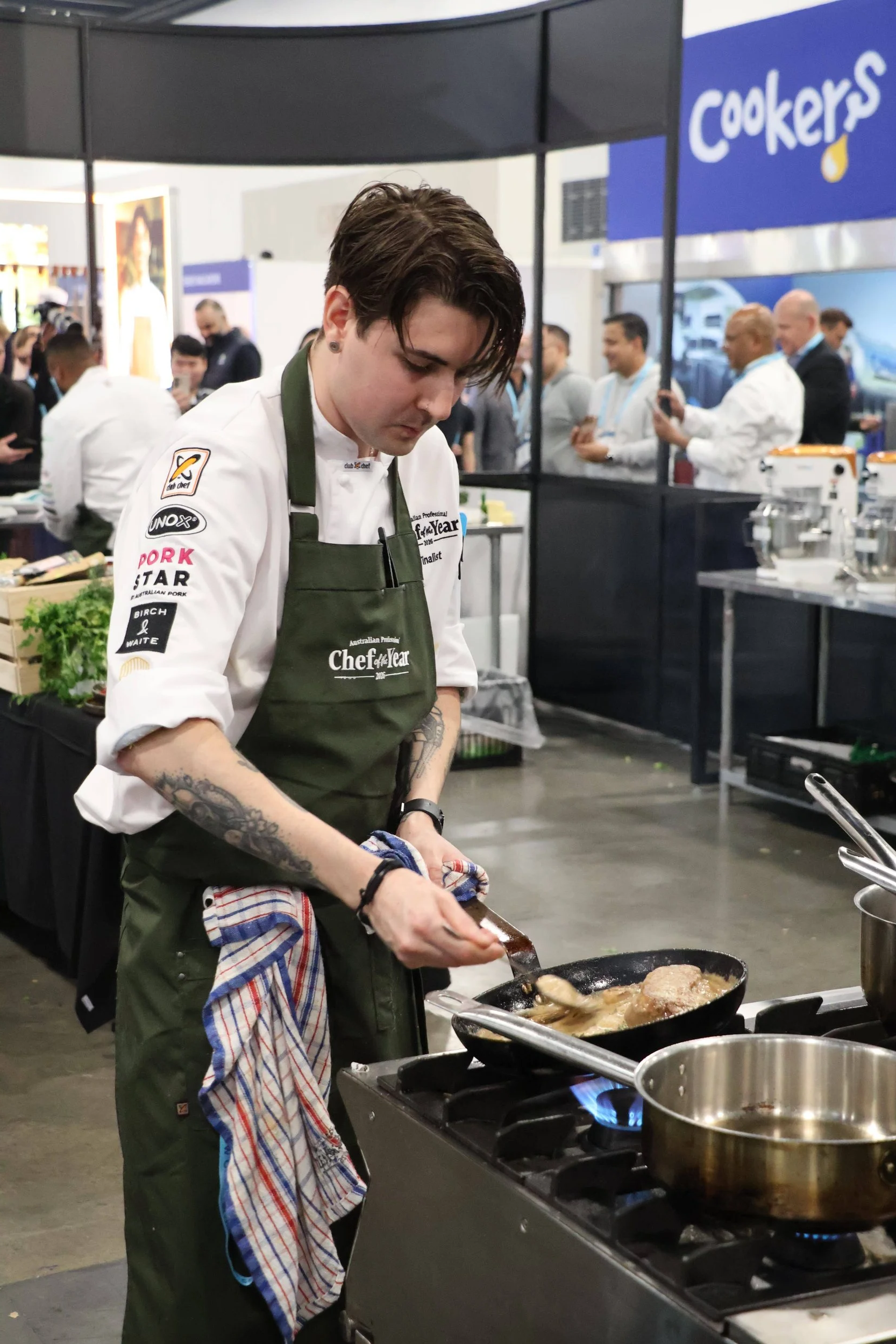
“In the end I went with a pork loin with pepper sauce, some roasted hazelnut cream, confit fennel and burnt orange. I knew those flavours would pair really well with pork, which is a meat I really enjoy eating because it’s so flavoursome. I decided on tried and true cooking techniques – I sealed it in a pan then put it in a bath of butter, garlic and hard herbs of thyme and rosemary, and sat it in the oven at 75 degrees. Because I did this early in the round I knew it was going to be cooked through at the end and I could concentrate on the rest of the dish.”
“I stuck to what I know works because I think if you cook and season something beautifully, it always pays off”
Making the most of the mystery box
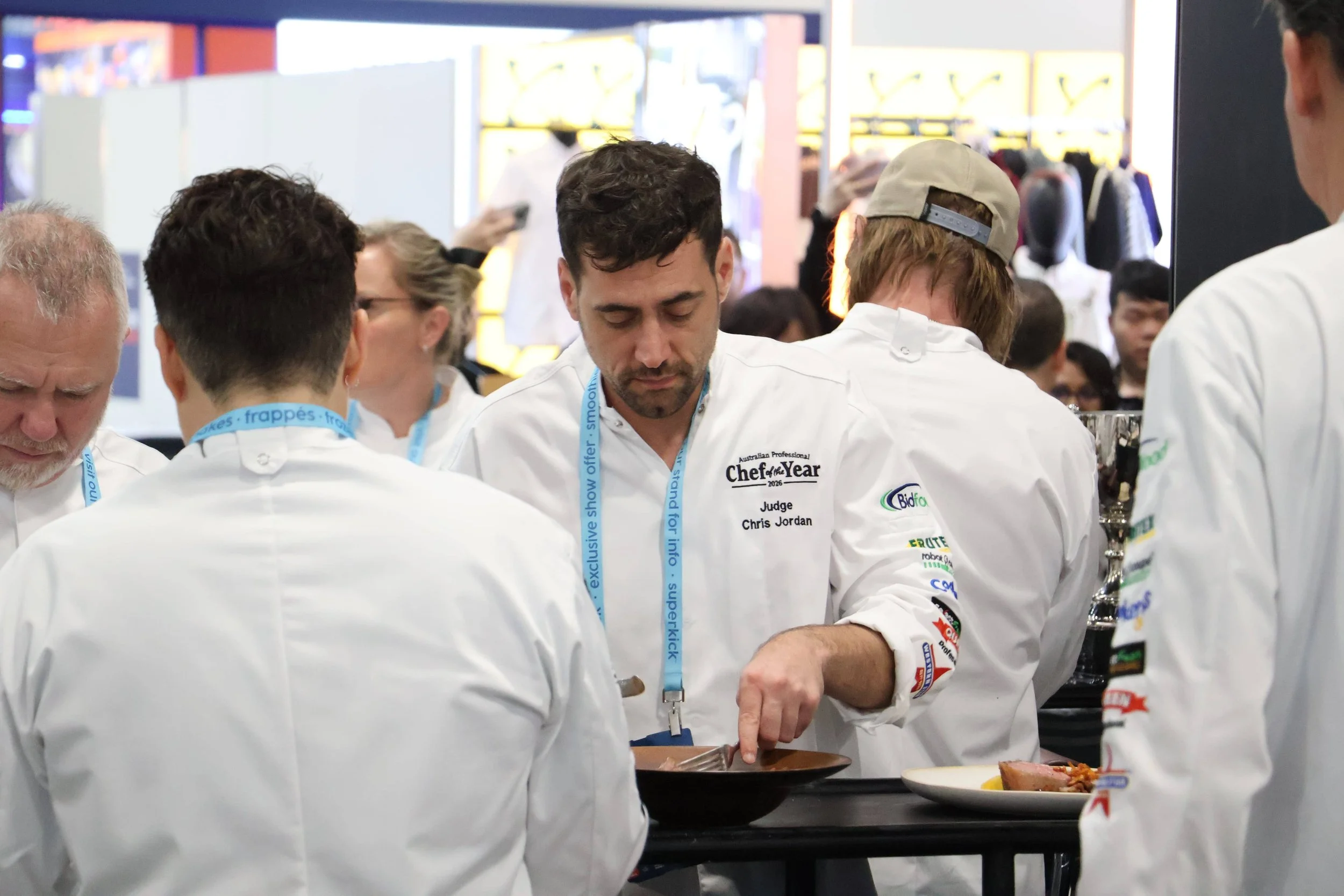
First Nations Chef & Competition Judge Chris Jordan
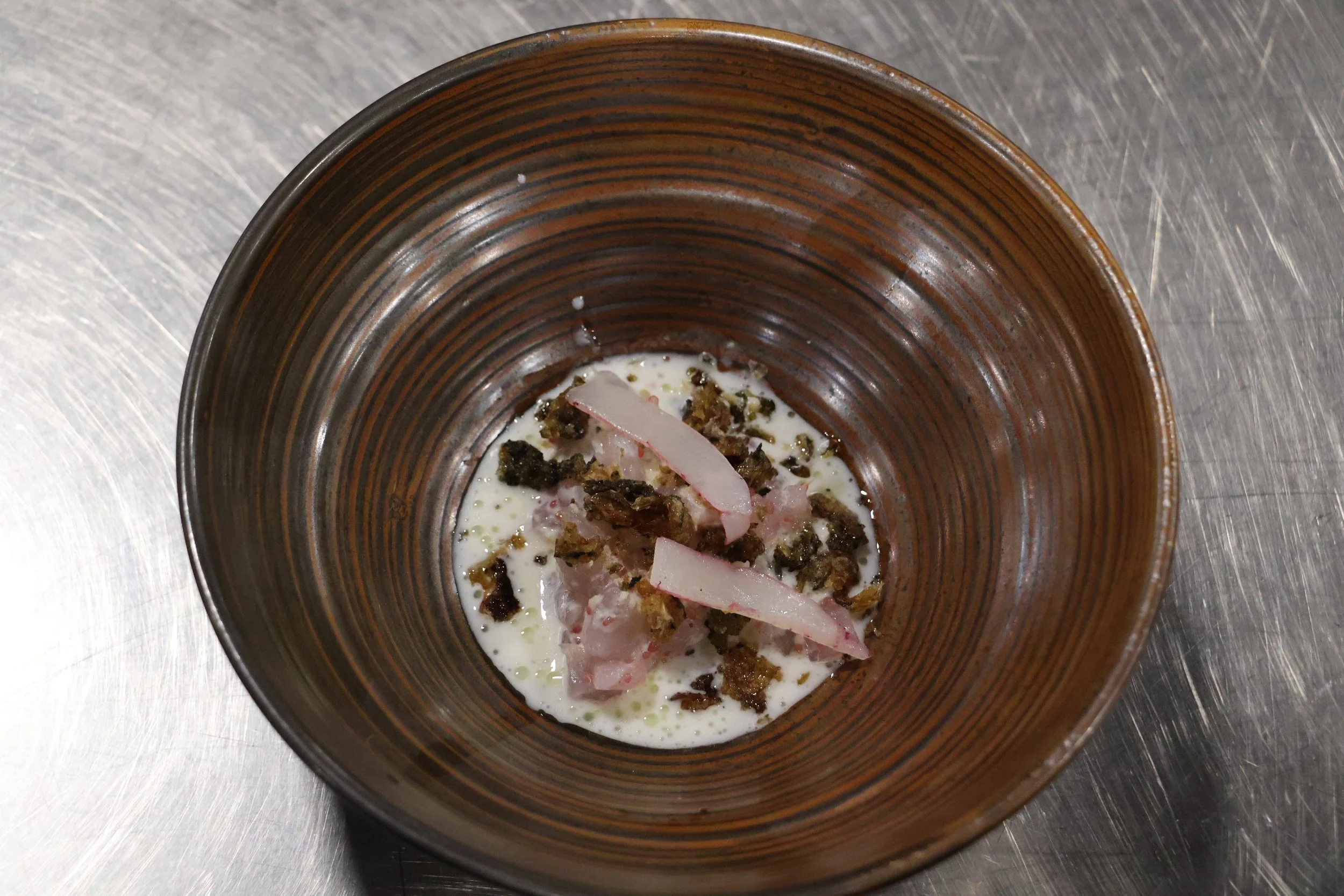
The mystery box ingredients for the grand final included a lamb rack, pork tenderloin, side of barramundi, veal jus and cured crocodile lard. There was also a stipulation to use a minimum of two Australian native ingredients, with First Nations Chef Chris Jordan on hand as one of the judges. “I think our native ingredients are amazing so I’m always happy to use them,” Oliver says. “For the entrée, I diced the barramundi up to make a tartare-ceviche hybrid and put some native finger lime through some oil and salt to use as a dressing. Then I took some Dairy Farmers Buttermilk – which I use all the time at work for dressings and sauces because it’s such a distinctive flavour profile and it won’t curdle or split out when you add citrus – and I combined it with a trio of lemon, lime and orange. I also used some lemon myrtle oil and I deep fried the barramundi skin which I’d taken off earlier, put it in the oven to roast and then crunched it over the top of the dish with the crocodile lard.
“When it came to the main, I drew on my experience of the 2024 grand final when we’d been given a lamb rack and I’d really struggled with frenching the bones and ended up wasting a lot of time. This time I cut the bones straight out and cleaned it up along with the pork tenderloin. I sealed the lamb in a pan then finished it in the oven. Pork tenderloin is very lean so I took the approach of foaming some butter in a pan with aromatic herbs and constantly basting it to transfer the heat through, then gave it plenty of time to rest.”
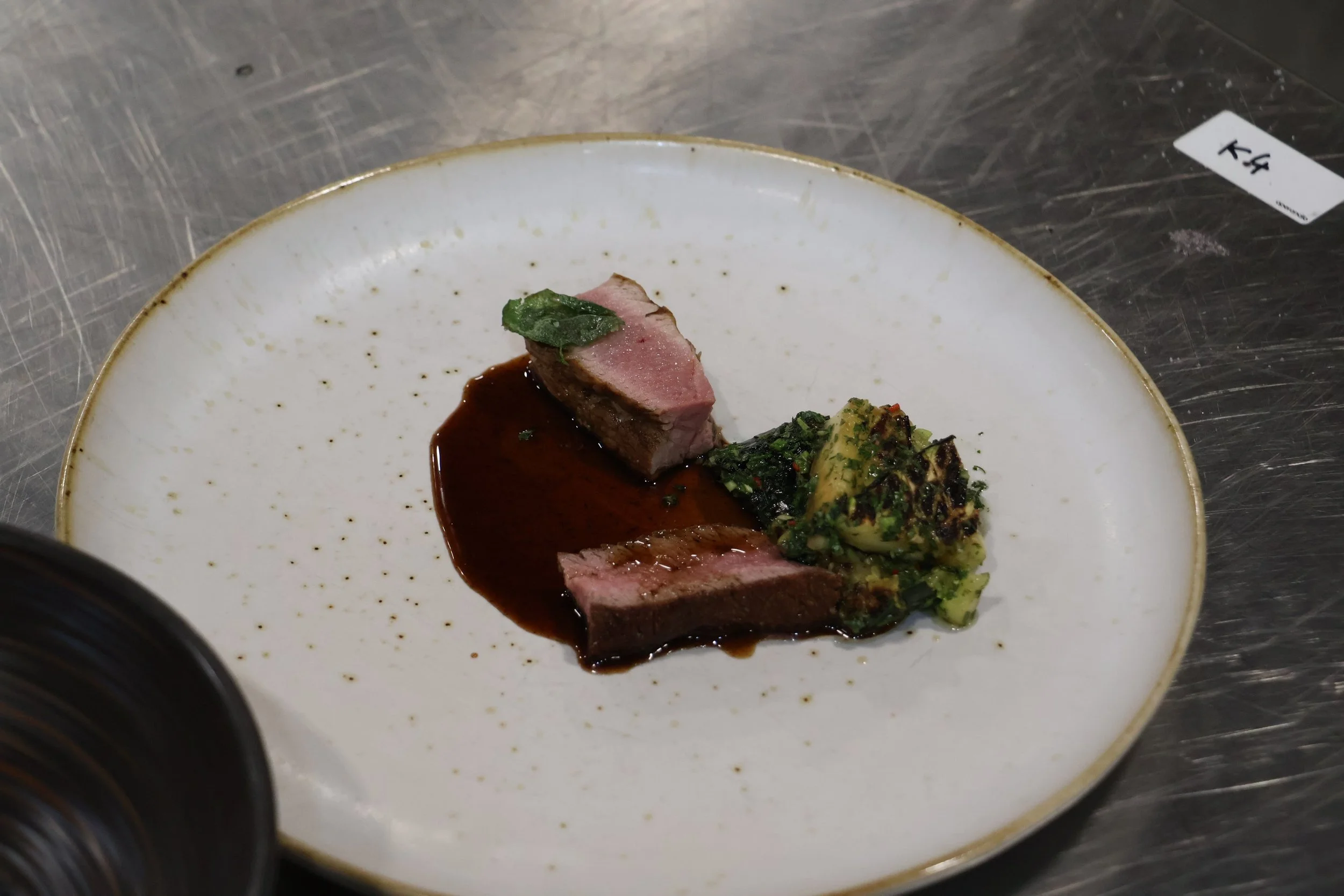
The dish was finished off with veal jus with mountain pepper and curry myrtle, plus some grilled zucchini which Oliver dressed in an indigenous chimichurri lemon aspen and chilli, minced garlic, parsley, dill and vinegar. “I cooked the lamb medium rare and went more towards medium with the pork – basically I took the approach of how I would like to see each ingredient served. Australian pork is always great quality so I was very happy to be working with it. I stuck to what I know works because I think if you cook and season something beautifully, it always pays off.”
“Skillset is a big part of it but it’s also about keeping your bottle, not getting too nervous and not letting the pressure get on top of you”
Jamie Gannon says of this year’s event: “The standard is getting a lot stronger, and think that’s down to the change in format plus the sponsors we’ve been able to get on board. We had some really great products for our contestants to work with, which is what I was determined to achieve – because you can’t expect chefs to do amazing creative stuff with ingredients that aren’t up there. We want them to have the best tools they need to succeed. Skillset is a big part of it but it’s also about keeping your bottle, not getting too nervous and not letting the pressure get on top of you. And at the end it comes down to taste and creativity because ideally the judges want to see something different on the plate, not just an easy option.”
Two days on from the event, Oliver is still coming to terms with his win. “It’s a humbling experience – it was certainly gruelling to do three heats back to back, but that’s not so hard when you compare it to 12 hours in a kitchen. Plus I got to cook my own way which is always fun. When I told my mum I’d won she burst into tears – it’s amazing to hear my parents say they’re proud of me because they’re the inspiration for me to go into cooking. I’ve had mentors send me congratulations, I’ve heard from chefs I’ve worked with and even some celebrity chefs have sent me a few messages, so I’ve been blown away really – it’s overwhelming! I’ve not had this much attention before and I’m going to make the most of it because it’s the culmination of years of hard work.”
Related articles